
7 Top Benefits of Acoustic Detection for Finding Hidden Water Leaks
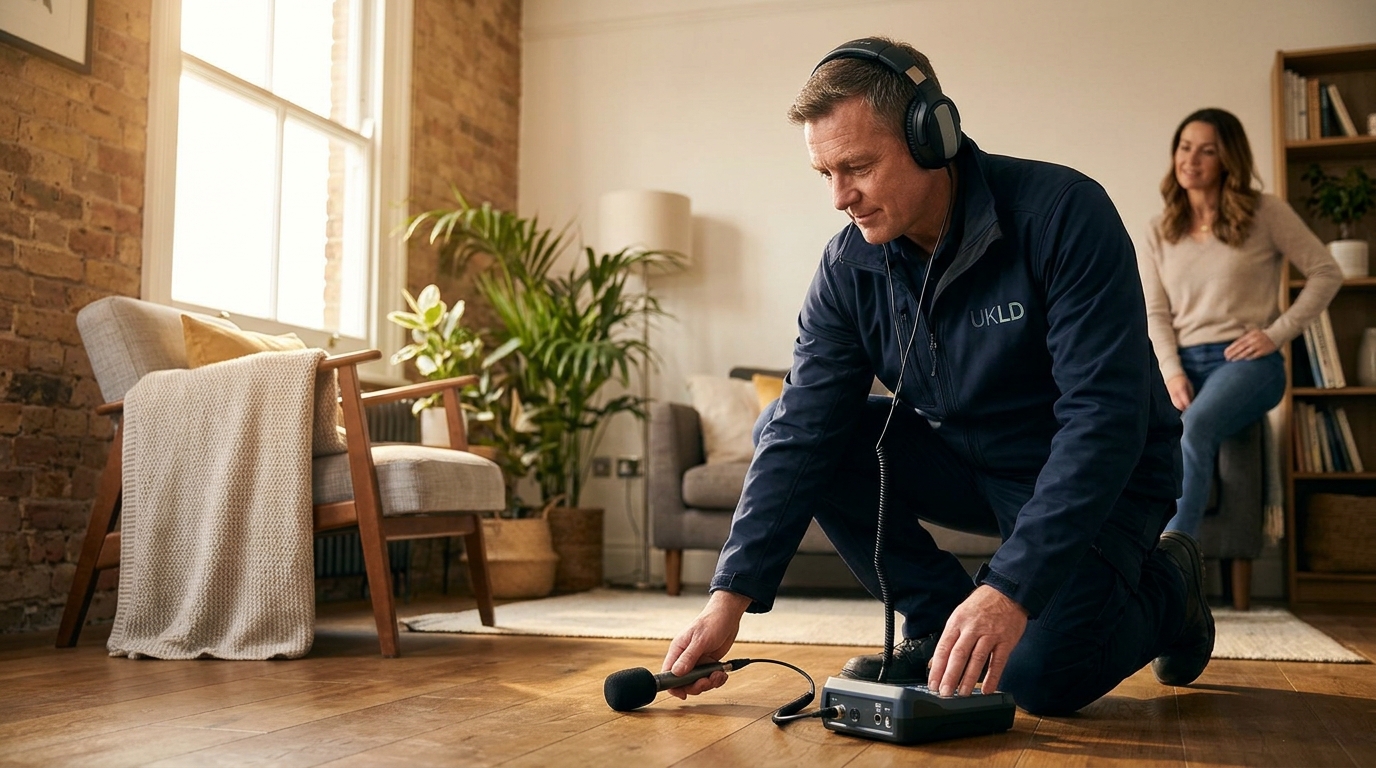
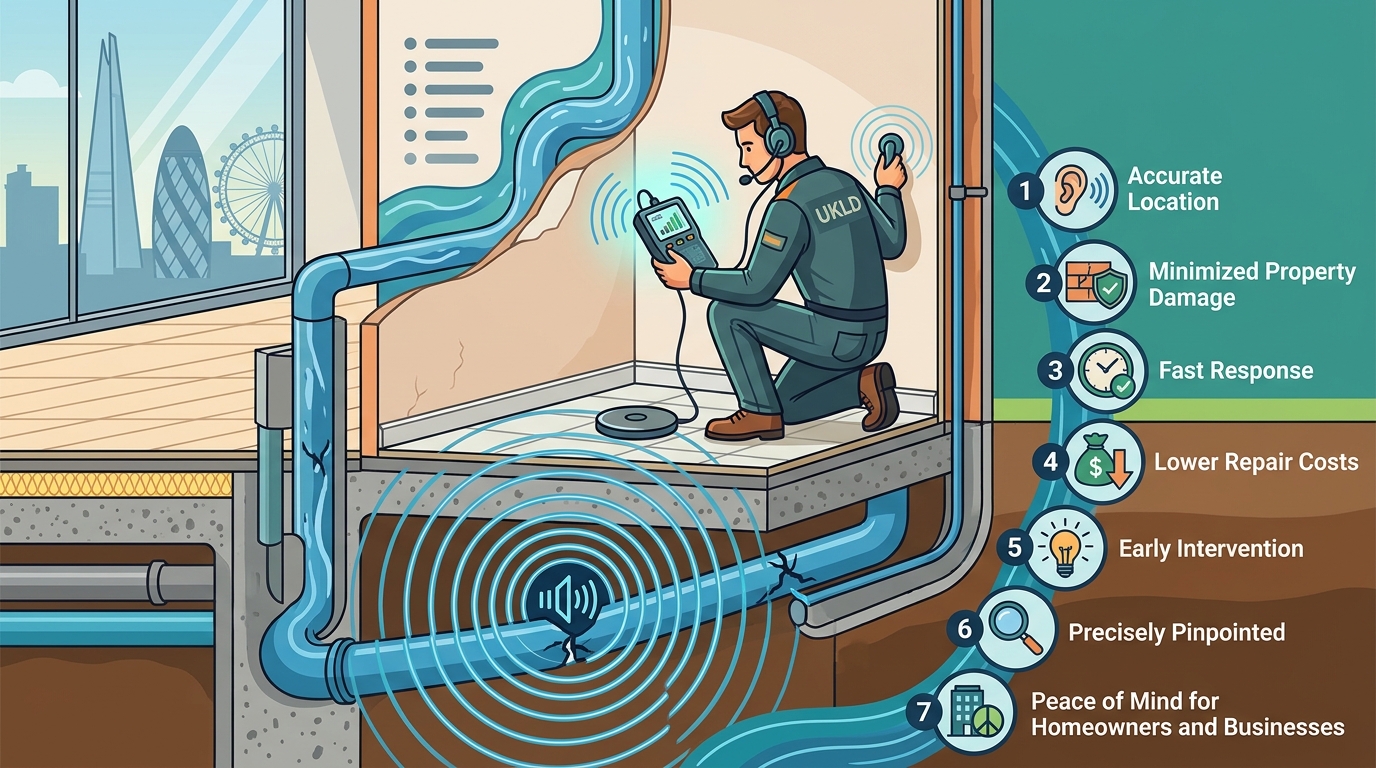
Acoustic detection is a non-invasive method that uses sound waves to locate the precise point of a water leak within concealed pipework. By listening for the specific frequency of escaping water, engineers can pinpoint hidden faults without destroying floors or walls. This approach is essential for minimizing property damage and reducing the cost of repairs in London homes and businesses.
1. Non-Invasive Property Protection
Acoustic detection preserves the structural integrity of your home by avoiding unnecessary demolition. Unlike traditional methods that rely on guesswork and destructive digging, acoustic sensors listen for the sound of water escaping under pressure. This allows engineers to identify the leak location without lifting floorboards or cutting into plasterboard. By keeping the process non-invasive, you protect your finishes and reduce the risk of collateral damage to your property.
2. Precision in Concealed Spaces
High-frequency sensors can isolate the exact point of a leak within complex building structures. Water under pressure creates a distinct acoustic signature that can be detected through concrete, wood, and other materials. Engineers use specialized microphones to triangulate the source, narrowing the search area to a few centimeters. This precision is critical when dealing with leaks hidden behind walls or under suspended floors where visual inspection is impossible.
3. Speed and Efficiency
Acoustic methods often yield results faster than invasive excavation or trial-and-error repairs. Because the technology targets the sound of the leak directly, it reduces the time spent searching large areas of a property. A faster diagnosis means less time for water to spread and cause secondary damage to surrounding materials. This efficiency is particularly valuable in commercial settings where downtime must be minimized.
4. Insurance Claim Support
Documented acoustic findings provide objective evidence for insurance trace and access claims. Insurers require proof that a leak exists and that access was necessary before approving coverage. Acoustic detection produces clear, technical data that supports the need for specific access points. This documentation helps streamline the claims process and ensures that the scope of work is justified and agreed upon by loss adjusters.
5. Cost-Effective Resolution
Targeting the exact leak point reduces the labor and material costs associated with repairs. When a leak is located precisely, plumbers only need to expose a small section of pipework for repair. This avoids the high costs of removing large sections of flooring or walling that might be required if the leak were found by chance. Minimizing the area of access directly translates to lower restoration and reinstatement expenses.
6. Compatibility with Other Technologies
Acoustic detection works best when combined with thermal imaging and moisture mapping for a comprehensive diagnosis. While sound locates the active leak, thermal cameras can show the extent of heat loss or temperature changes caused by the water. Moisture meters then confirm the saturation levels in surrounding materials. Using multiple technologies together provides a complete picture of the damage, ensuring no hidden issues are missed during the repair phase.
7. Minimized Disruption
Less invasive detection means less mess, noise, and inconvenience for occupants. Homeowners and business owners benefit from a cleaner and quieter diagnostic process. Since the initial investigation does not require heavy machinery or extensive demolition, daily life can continue with minimal interruption. This is a significant advantage for families with young children or businesses that need to maintain operations during the investigation.
Choosing the Right Approach
When selecting a leak detection method, prioritize non-invasive technologies that provide objective, documented evidence. Acoustic detection is a cornerstone of modern leak tracing because it balances precision with property preservation. For the best results, ensure the provider uses a multi-technology approach that includes acoustic sensors alongside thermal and moisture analysis.
Frequently Asked Questions
Does acoustic detection work on all types of pipes?
Acoustic detection is effective on pressurized systems where water is flowing under pressure. It is less effective on unpressurized systems or where the leak is very small and does not produce a significant sound signature. In such cases, engineers may need to use alternative methods like trace gas or thermal imaging.
Will acoustic detection damage my floors or walls?
No, the detection phase is non-invasive. The sensors are placed on the surface of the floor or wall to listen for the leak. Any damage to the property only occurs during the subsequent access and repair phase, which is limited to the specific area where the leak is confirmed.
How long does an acoustic leak detection survey take?
The duration depends on the size of the property and the complexity of the leak. A simple survey might take a few hours, while more complex cases involving large areas of concrete or multiple floors can take longer. The goal is to narrow the search area as quickly as possible to minimize the overall timeline.
Can acoustic detection find leaks under concrete?
Yes, sound waves can travel through concrete, allowing engineers to detect leaks beneath solid floors. The density of the concrete may affect the clarity of the signal, but modern sensors are designed to penetrate these materials to locate the source of the leak.
Is acoustic detection covered by insurance?
Most home insurance policies include trace and access cover, which typically covers the cost of professional leak detection and the necessary access to repair the leak. You should check your specific policy wording to confirm the limits and conditions of your coverage.
Conclusion
Acoustic detection is a vital tool in the modern leak detection toolkit, offering precision, speed, and property protection. By using sound to locate hidden leaks, engineers can minimize damage and support insurance claims with objective evidence. For expert leak detection services in London, contact UK Leak Detection to schedule a professional survey.