
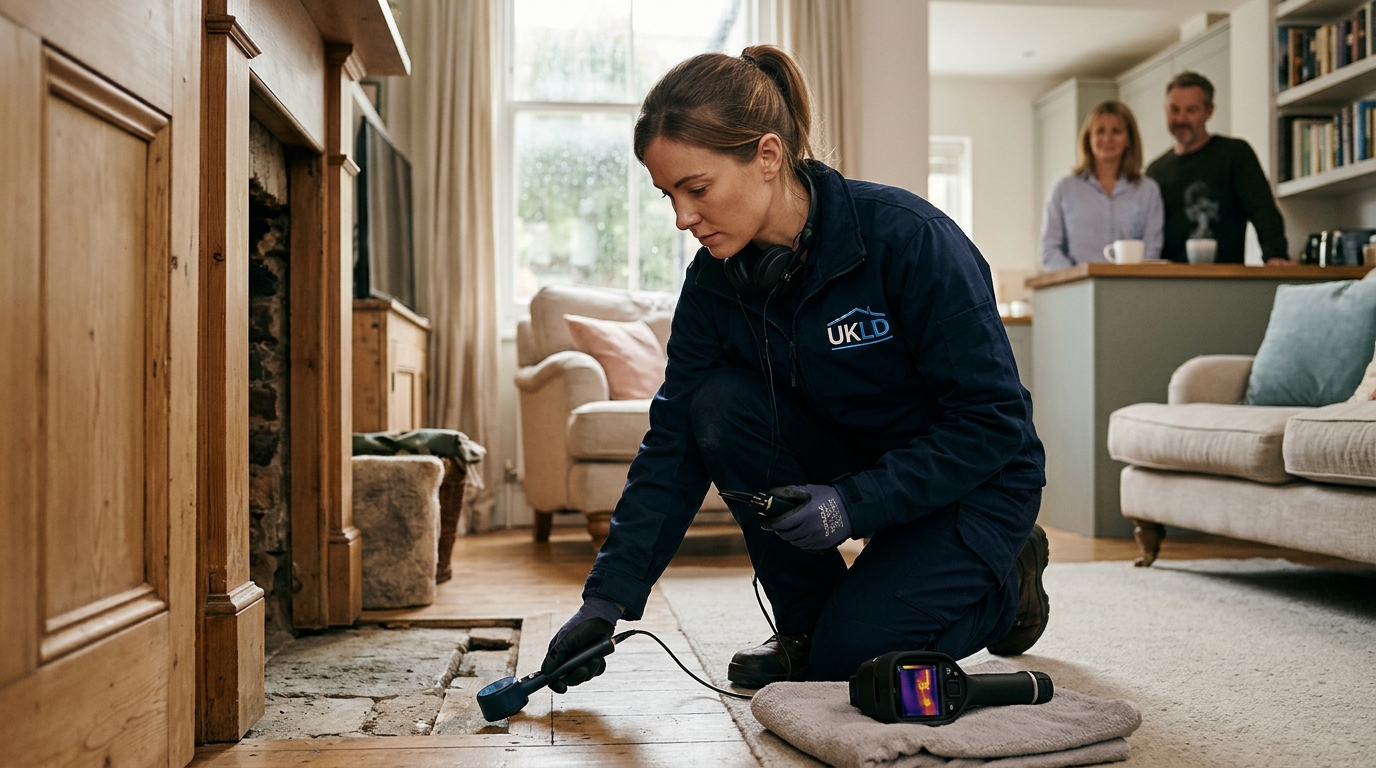
Choosing the right professional to locate a hidden water leak is critical for protecting your property and managing costs. The wrong choice can lead to unnecessary damage, inflated repair bills, or failed insurance claims. This listicle outlines the essential criteria for evaluating a leak detection firm. It helps you distinguish between a genuine specialist and a generalist plumber. You will learn what to verify before booking an appointment.
1. Use of Advanced, Non-Invasive Technology
Look for a firm that employs multiple diagnostic tools rather than relying on guesswork. A true specialist uses a combination of thermal imaging, acoustic listening, and tracer gas to pinpoint leaks. This multi-method approach ensures accuracy without destroying your floors or walls. UK Leak Detection emphasizes that no single piece of equipment can find every leak. They use high-quality cameras and digital acoustic systems to confirm findings with two different methods.
2. Specialization in Hidden and Underground Leaks
Verify that the company focuses specifically on locating leaks beneath concrete, screed, and finished flooring. General plumbers often lack the training to detect leaks under solid floors. A specialist understands the complexity of pressurized systems and underground mains. They can identify leaks that are invisible to the naked eye. This expertise prevents the need for speculative excavation, which is costly and disruptive.
3. Transparent Pricing and Clear Fee Structures
Ensure the provider offers a clear, upfront fee structure with no hidden costs for the initial investigation. Avoid firms that quote vague hourly rates without a cap. A reputable specialist will explain their charges before starting work. UK Leak Detection offers a no-find, no-fee guarantee for most domestic water leaks. This means you are not charged for the detection service if they cannot locate the leak. This policy aligns their incentives with your success.
4. Experience with Insurance Trace and Access Claims
Choose a provider that understands the specific requirements of insurance policies for water damage. Most home insurance policies include Trace and Access cover, which pays for locating and accessing a hidden leak. A specialist knows how to document the leak to satisfy insurers. They can provide photographic reports and evidence that supports your claim. This expertise helps you navigate the claims process more smoothly and reduces the risk of disputes.

5. Independence from Repair and Restoration Companies
Prefer an independent diagnostic firm that does not also perform the repairs. Conflict of interest can arise when a company both finds the leak and fixes it. An independent specialist provides an unbiased assessment of the problem. They can recommend the most appropriate repair method without being tied to a specific contractor. This objectivity ensures you receive honest advice on the next steps.
6. Comprehensive Reporting and Documentation
Require a detailed written report with photographic evidence of the leak and the investigation process. This documentation is crucial for insurance claims and future reference. It proves that the leak was located using professional methods. It also records the condition of the pipework and the extent of the damage. A clear report helps you communicate with your insurer and any subsequent repair contractors.
7. Local Knowledge and Rapid Response Times
Select a provider with a strong local presence to ensure fast attendance. Water damage worsens with every hour it goes unaddressed. A local specialist can often attend the same day or next day. They understand local building practices and common leak scenarios. UK Leak Detection operates across London and the Home Counties, offering nationwide service for complex cases. Proximity reduces travel time and allows for quicker resolution.
How to Choose the Right Specialist
When comparing providers, prioritize technology and independence over price alone. A slightly higher fee for a specialist with a no-find, no-fee guarantee is often cheaper than a low-cost generalist who digs up your floor. Verify their experience with insurance claims and request a sample report. The right choice protects your property and your wallet.
Frequently Asked Questions
What is the difference between a leak detection specialist and a plumber?
A leak detection specialist focuses exclusively on locating the source of a leak using advanced diagnostic tools. A plumber focuses on repairing pipes and installing new systems. Specialists use non-invasive methods to find hidden leaks, while plumbers typically work on visible or accessible pipework.
Do I need to be home during the leak detection process?
Yes, you or an authorized person must be present to grant permission for any necessary access. The engineer will explain the process and any potential intrusive work before proceeding. Your presence ensures that decisions about opening floors or walls are made with your approval.
Can a leak detection specialist repair the leak?
Most independent specialists do not perform repairs. They locate the leak and provide a report. You then hire a plumber or heating engineer to make the repair. This separation ensures an unbiased diagnosis and helps with insurance claims, as repairs are often classified as maintenance.
How long does a leak detection investigation take?
Most investigations take between two and four hours. Complex cases involving underground mains or large properties may take longer. The duration depends on the type of leak, the construction of the property, and the technology required to locate the source.
What if the specialist cannot find the leak?
If the firm offers a no-find, no-fee guarantee, you will not be charged for the detection service. They will provide a report detailing the areas investigated and the methods used. This report can be useful for your insurance claim or for guiding further investigation by other professionals.
Is leak detection covered by home insurance?
Many home insurance policies include Trace and Access cover, which typically pays for the cost of locating and accessing a hidden leak. Check your policy documents to confirm the limit of cover and any excesses. A specialist can provide the evidence needed to support your claim under this cover.
Next Steps
If you suspect a hidden leak, act quickly to prevent further damage. Contact a qualified specialist to assess the situation. UK Leak Detection offers expert advice and fast response times across the UK. our team can help you navigate the detection process and support your insurance claim.