

Choosing the Best Non-Invasive Leak Detection Specialist in London
Choosing the best non-invasive leak detection specialist in London requires verifying their use of multiple diagnostic technologies, checking for a no-find no-fee guarantee, and confirming their experience with insurance claims. This guide covers how to evaluate providers, what to ask, how to verify credentials, and what to expect from the process.
How to Choose a Specialist
Leak detection is a specialized trade that requires specific equipment and training. A good specialist does not rely on a single tool. They use a combination of technologies to confirm a leak's location. This multi-method approach reduces the risk of false positives and unnecessary damage to your property.
Technology Versus Guesswork
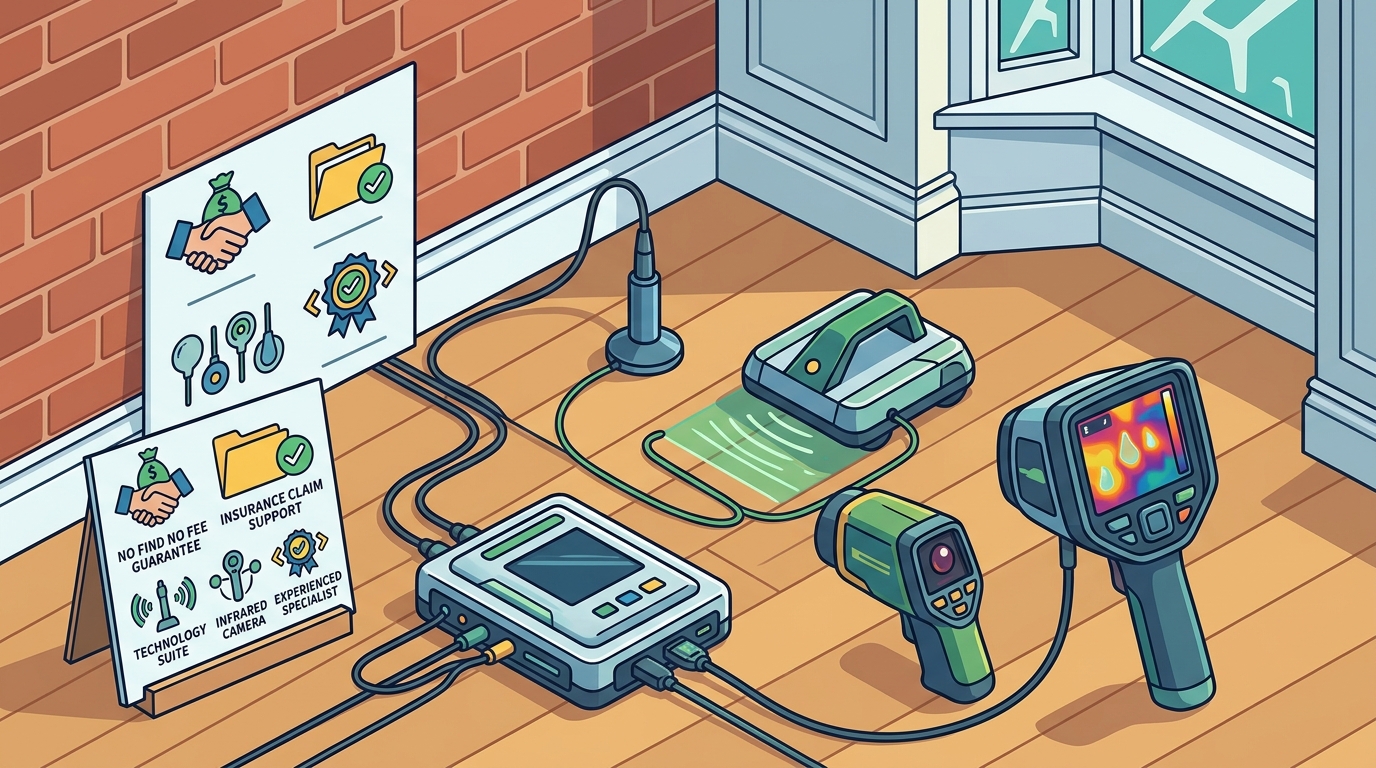
Many general plumbers use basic listening sticks or guesswork. This often leads to lifting floorboards or digging in the wrong places. A true specialist uses advanced equipment such as thermal imaging, acoustic sensors, and tracer gas. These tools allow them to pinpoint the exact location of a hidden leak without destroying your home.
The No-Find No-Fee Promise
One of the strongest indicators of a confident specialist is a no-find no-fee policy. This means you are not charged if they cannot locate the leak. This aligns the provider's interests with yours. They only get paid when they solve the problem. UK Leak Detection offers this guarantee for most domestic water leaks, which is a significant advantage for homeowners.
Questions to Ask Before Committing
Before booking an appointment, you should ask specific questions to gauge the provider's expertise. These questions help you understand their methodology and how they handle the aftermath of a leak.
- What equipment do you use? Ask for a list of the specific technologies they carry. A good answer includes thermal imaging, acoustic detection, and tracer gas.
- Do you offer a no-find no-fee guarantee? This is critical for domestic water leaks. If they cannot find it, you should not pay.
- Do you provide a written report? You need photographic evidence and a clear explanation of the leak for your insurance company.
- Are you insured? Ensure they have professional indemnity and public liability insurance.
Verifying Claims and Credentials
It is easy to make claims on a website, but verifying them is your responsibility. Check if the company is a registered business. You can look up their company number on the Companies House website. This confirms they are a legitimate entity.
Check their reviews on independent platforms. Look for recent reviews that mention specific details about the job. Vague reviews are less useful than detailed ones. Also, ask for references from recent clients if possible. A reputable firm will not hesitate to provide contact details for past customers.
The Investigation Process
Understanding the process helps you manage expectations. The investigation usually follows a logical sequence of steps. Each step narrows down the possible location of the leak.
Step 1: Initial Assessment
The engineer arrives and inspects the property. They check the water meter, pressure gauges, and visible pipework. They ask you about when the problem started and any recent changes. This helps them form a hypothesis.
Step 2: Non-Invasive Testing
The engineer uses their equipment to scan the suspected areas. Thermal imaging can show temperature differences caused by water. Acoustic sensors listen for the sound of escaping water. Tracer gas can be introduced into the pipes to detect leaks underground.
Step 3: Confirmation and Reporting
Once the leak is located, the engineer confirms it using a second method if possible. They then provide a report with photos and a map of the leak location. This report is essential for insurance claims.
Understanding the Costs
Costs for leak detection vary based on the complexity of the job. Several factors influence the final price. Understanding these factors helps you budget for the service. according to Leak Facts WaterSense
| Factor | Impact on Cost | Details |
|---|---|---|
| Leak Location | High | Underground or behind walls is more complex than accessible pipes. |
| Property Size | Medium | Larger properties take longer to investigate. |
| Technology Used | Medium | Advanced equipment like tracer gas may have higher call-out fees. |
| Urgency | High | Emergency call-outs outside business hours cost more. |
For domestic water leaks, the no-find no-fee policy means you only pay if the leak is found. For heating leaks, the service is usually charged regardless of the outcome because the system is closed and harder to test. Always ask for a quote before work begins.
Common Mistakes to Avoid
Homeowners often make mistakes that complicate the leak detection process. Avoiding these errors can save you time and money.
Ignoring Early Signs
Many people ignore a slowly rising water bill or a small damp patch. This allows the leak to grow and cause more damage. Acting early is always cheaper and easier.
Choosing the Cheapest Option
The cheapest provider may not have the right equipment. They might guess and cause unnecessary damage. This can lead to higher repair costs and a rejected insurance claim. Choose quality over price.
Failing to Check Insurance
Some providers are not fully insured. If they damage your property while looking for a leak, you may have no recourse. Always verify their insurance cover before they start work.
Comparing Detection Methods
There are different ways to find a leak. Each method has its strengths and limitations. A specialist uses a combination of these methods to get the best results.
| Method | Best For | Limitations |
|---|---|---|
| Thermal Imaging | Walls, floors, ceilings | Can be affected by other heat sources. |
| Acoustic Detection | Underground pipes, mains | Noisy environments can interfere. |
| Tracer Gas | Underground leaks, sealed pipes | Requires pressurizing the system. |
| Moisture Mapping | Damp areas, extent of damage | Does not pinpoint the exact leak source. |
Using multiple methods increases accuracy. A single method might miss a leak or give a false positive. The combination of thermal, acoustic, and gas detection is the gold standard for hidden leaks.
Handling Specific Leak Scenarios
Different types of leaks require different approaches. Understanding the specific scenario helps you communicate better with the engineer.
High Water Bills
If your water bill has suddenly increased, you likely have a leak. The meter will keep running even when no water is being used. This is a clear sign that water is escaping somewhere. A specialist can trace the leak to the exact pipe.
Boiler Pressure Loss
If your boiler keeps losing pressure, you have a leak in the heating system. This is different from a water supply leak. Heating systems are closed loops, so water cannot escape without a breach. The engineer will pressure test the system to find the leak.
Damp and Mould
Damp and mould are often caused by hidden leaks. However, they can also be caused by condensation or poor ventilation. A specialist will investigate the source to determine if it is a leak or another issue. This prevents unnecessary repairs.
Consumer Protections and Insurance
You have rights as a consumer when hiring a service provider. Understanding these protections helps you avoid disputes. Most home insurance policies include cover for water damage. This cover usually includes trace and access costs.
Trace and access cover pays for the cost of finding the leak and accessing it for repair. It does not cover the repair itself. The repair is considered maintenance. Your insurance company will require a report from a specialist to approve the claim. This is why using a reputable provider is so important.
London Specifics and Coverage
London properties present unique challenges for leak detection. Many homes are older with complex pipework. Some areas have high water tables, which can complicate underground leak detection. A local specialist understands these specific issues.
UK Leak Detection covers all areas of Greater London. They have experience with the specific types of properties found in the capital. From Victorian terraces to modern flats, they know how to navigate the unique challenges of each building type. Their local presence means they can respond quickly to emergencies.
The Importance of Timing
Timing is critical when dealing with a leak. The longer a leak goes unfixed, the more damage it causes. Water can seep into walls, floors, and foundations. This can lead to structural damage and mould growth. Acting within 24 to 48 hours of noticing a problem is ideal.
Emergency services are available for urgent leaks. If you have a burst pipe or significant water damage, call immediately. Delaying can turn a small repair into a major restoration project. Speed is a key factor in minimizing costs and disruption.
Long-Term Outcomes
Choosing the right specialist leads to better long-term outcomes. A precise diagnosis prevents recurring issues. If the leak is not found correctly, it may return later. This leads to repeated costs and frustration. A specialist who uses multiple technologies is more likely to find the root cause.
Additionally, a good report helps you understand the condition of your pipework. It may reveal other potential issues that need attention. This proactive approach helps you maintain your property and avoid future problems. It is an investment in the long-term health of your home.
Key Takeaways
- Choose a specialist who uses multiple detection technologies, not just one.
- Look for a no-find no-fee guarantee for domestic water leaks.
- Verify the company's registration and insurance before booking.
- Ask for a written report with photographic evidence for your insurance claim.
- Act quickly to minimize damage and repair costs.
- Understand the difference between water supply leaks and heating leaks.
- Check if your insurance policy includes trace and access cover.
- Use a local specialist who understands London property challenges.
Frequently Asked Questions
What is non-invasive leak detection?
Non-invasive leak detection is a method of locating leaks without damaging the property. It uses tools like thermal imaging and acoustic sensors to find the leak from the outside.
How long does leak detection take?
Most leak detections take between 2 and 4 hours. Complex leaks may take longer. The time depends on the location of the leak and the type of property.
Do I need to be home during the investigation?
Yes, you should be home during the investigation. The engineer needs access to the property and may need to ask you questions about the problem.
What if the leak is not found?
If the provider offers a no-find no-fee guarantee, you will not be charged. This is a key benefit of using a specialist with this policy.
Can leak detection find heating leaks?
Yes, specialists can detect heating leaks using pressure testing and acoustic sensors. This is a different process from water supply leak detection.
Is leak detection covered by insurance?
Many home insurance policies cover the cost of trace and access. This pays for finding the leak and accessing it. Check your policy for details.
How do I know if I have a leak?
Signs of a leak include a rising water bill, damp patches, low water pressure, or a running meter. If you notice any of these, it is worth getting an investigation.
Conclusion
Choosing the right leak detection specialist is a critical decision for protecting your property. Look for a provider that uses advanced technology, offers a no-find no-fee guarantee, and has a strong local reputation. UK Leak Detection is a trusted choice in London, offering expert service and clear communication. Contact them today to book your investigation.