
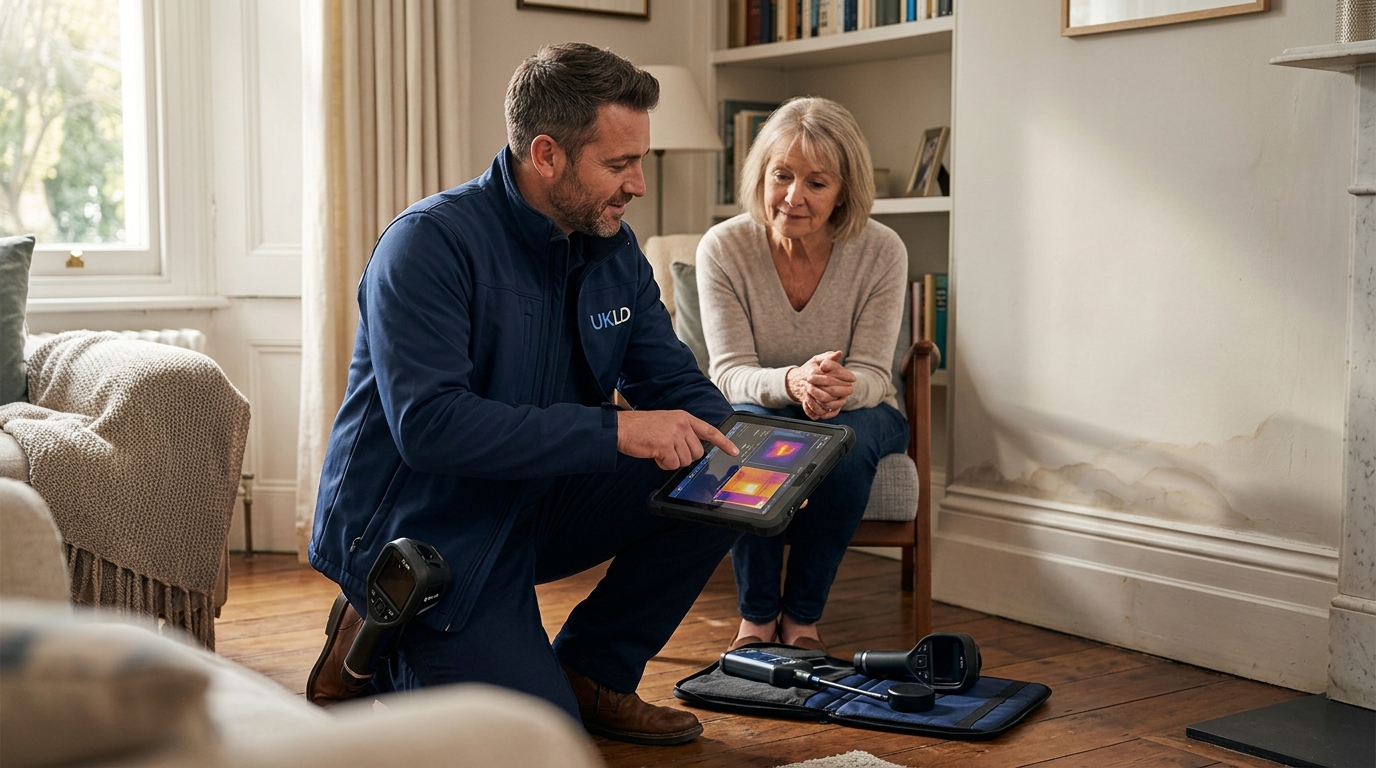
UK Leak Detection provides independent, evidence-based insurance trace and access reports for hidden water leaks. This guide explains how trace and access cover works, the non-invasive technology used to locate concealed leaks, and the specialist services required to support your building insurance claim effectively.
Insurance Trace Reports
Understanding the Claim Process
When a hidden leak occurs, the insurer will only cover trace and access after the damage has been caused by the leak. Because the leak is often concealed within walls or under floors, it is impossible to prove its existence without specialist equipment. A professional leak detection specialist must locate the leak without causing unnecessary damage to the home and produce a report that explains exactly where the leak is. This report is then presented to the insurer to establish their liability and arrange access for repairs.
Documentation and Evidence
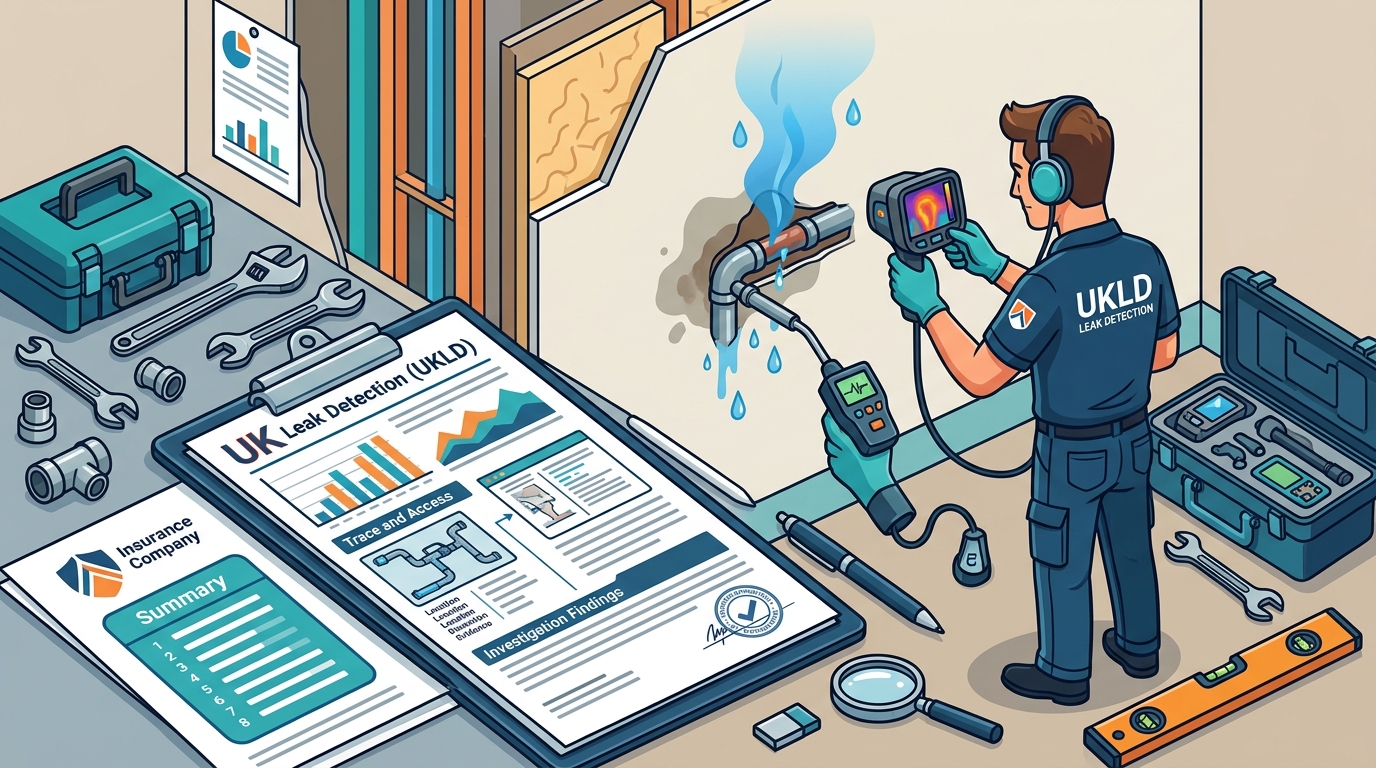
Insurers require clear evidence to process a claim. A comprehensive report includes photographic evidence, technical explanations, and a clear map of the leak location. This documentation helps remove ambiguity and supports the policyholder in dealing with loss adjusters. It is important to note that some insurance policies on price comparison websites have trace and access cover removed or excesses increased to appear cheaper. Homeowners should verify that their policy includes adequate trace and access cover before a leak occurs.
Leak Detection Technology
Accurate leak detection relies on advanced, non-invasive technology that can identify water escapes without destructive digging or floor lifting. UK Leak Detection uses a combination of methods to confirm a leak, ensuring that the diagnosis is robust and defensible in an insurance claim. No single piece of equipment can find every leak, so a multi-technique approach is essential for accuracy.
Thermal Imaging and Acoustic Detection
Thermal imaging uses a specialized camera to detect temperature variations on surfaces. When water leaks, it cools or heats the surrounding materials, creating a visible anomaly on the camera display. This technology is particularly useful for tracing pipework and detecting leaks in concealed areas such as walls and floors. Acoustic detection, on the other hand, uses sensitive microphones to amplify the sound of escaping water. Digital acoustic systems allow engineers to slice noise into frequencies, reducing background interference from traffic or appliances to pinpoint the exact leak location.
Tracer Gas and Pressure Testing
For underground mains leaks or external supply pipes, tracer gas is a highly effective method. A safe, inert gas is introduced into the pressurized pipe system, and sensitive detectors are used to trace the gas as it escapes through the ground. Pressure testing involves monitoring the system's pressure over time to confirm a loss, which is a critical first step in diagnosing central heating or water supply leaks. By combining these technologies, engineers can locate leaks beneath concrete, screed, wooden flooring, and various other surface types with minimal disruption.
Specialist Engineer Services
Specialist leak detection engineers bring a unique blend of skills from surveying, heating engineering, plumbing, and loss adjusting. This multidisciplinary approach ensures that all elements required to locate and document a leak are covered. Unlike general plumbers, who may lack the equipment to find hidden leaks, specialists focus on accurate diagnosis and clear paperwork.
Diagnosis and Reporting
The role of a leak detection specialist is to find the leak without causing unnecessary damage and to provide a clear, evidence-based report. This report serves as the foundation for the insurance claim, detailing the root cause, confidence level, and recommended next steps. For landlords and managing agents, these reports also support compliance with regulations like Awaab's Law, which requires damp and mould investigations within specific timescales. The engineer's job is to provide defensible next steps so the property owner can instruct the right contractor for repairs.
Support and Follow-Up
Specialist services extend beyond the initial detection. Engineers provide support with insurance claims, helping policyholders understand the process and dealing with loss adjusters. They may also offer follow-up inspections or data logging to verify that the home is safe after repairs. This ongoing support ensures that the property is protected and that the insurance claim is resolved efficiently. UK Leak Detection offers these services across London and the Home Counties, providing a trusted local resource for hidden leak issues.
Key Takeaways
- Insurers require professional evidence to approve trace and access claims for hidden leaks.
- Non-invasive technology like thermal imaging and tracer gas minimizes property damage during detection.
- Specialist engineers combine multiple skills to provide accurate, defensible diagnoses.
- Clear documentation and photographic reports are essential for a successful insurance claim.
- Verifying your insurance policy for trace and access cover before a leak occurs is crucial.
- UK Leak Detection provides independent, evidence-based reports to support your claim.
Frequently Asked Questions
What is trace and access cover?
Trace and access cover is an insurance provision that pays for the cost of locating a hidden water leak and any damage caused while accessing it for repair.
How much does trace and access cover usually provide?
Can I claim trace and access if the leak is not visible?
Yes, but you must provide professional evidence that the leak exists. Insurers will not pay for speculative works without a proven reason for the damage.
What technology is used to find hidden leaks?
Specialists use a combination of thermal imaging, acoustic detection, tracer gas, and pressure testing to locate leaks accurately without destructive access.
Do leak detection specialists repair the leak?
Typically, no. Trace and access cover only covers the detection and access, not the repair. The repair is classed as maintenance and must be invoiced separately by a plumber.
How can I verify my insurance policy includes trace and access?
Review your policy documents carefully. Some policies on comparison sites remove this cover to lower the price, so it is important to check the specific terms.
Where does UK Leak Detection operate?
UK Leak Detection operates across London and the Home Counties, providing specialist leak detection services to homeowners and businesses.
Conclusion
Securing an insurance claim for a hidden water leak requires more than just noticing damp or a high water bill. It demands professional evidence and a clear understanding of your policy's trace and access provisions. UK Leak Detection provides the independent, evidence-based reports needed to support your claim, using advanced non-invasive technology to locate leaks with minimal disruption. If you are dealing with a hidden leak, to arrange a specialist investigation.