
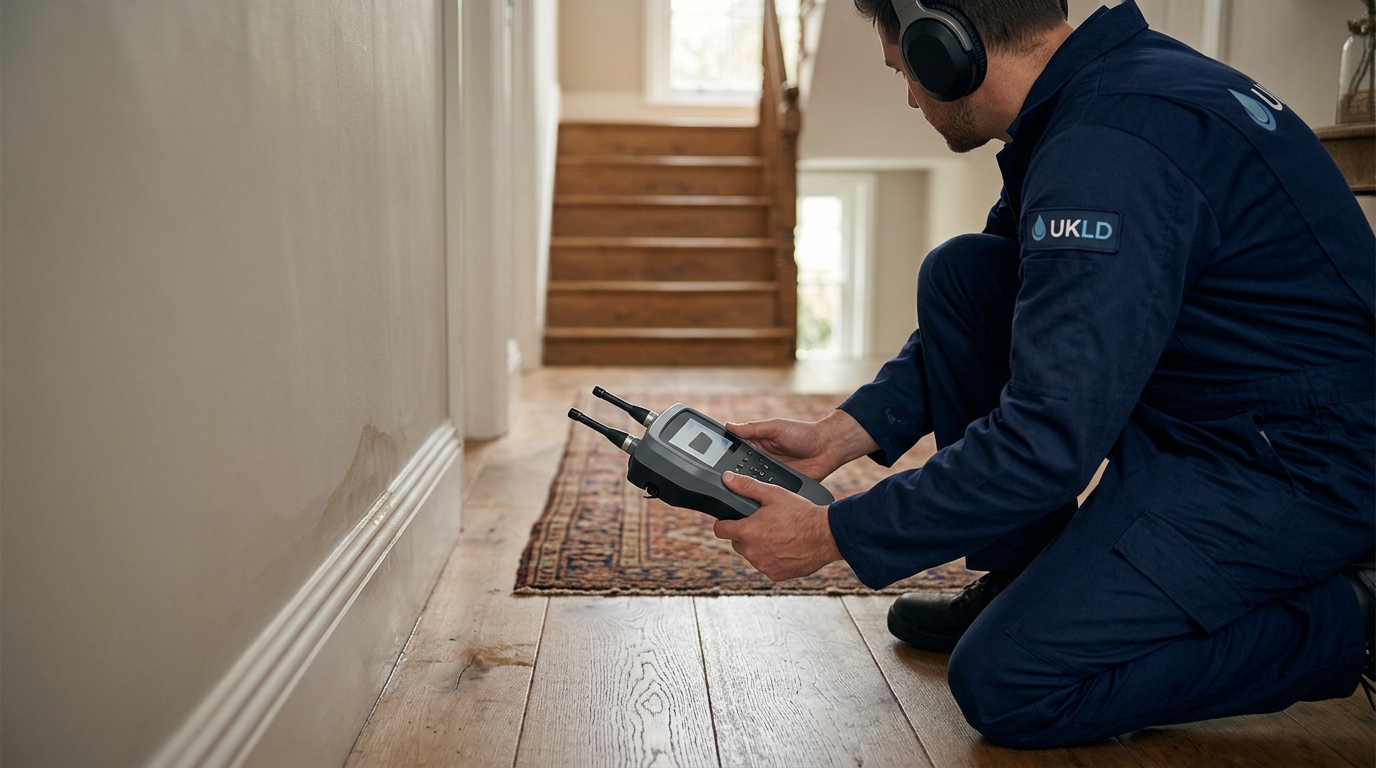
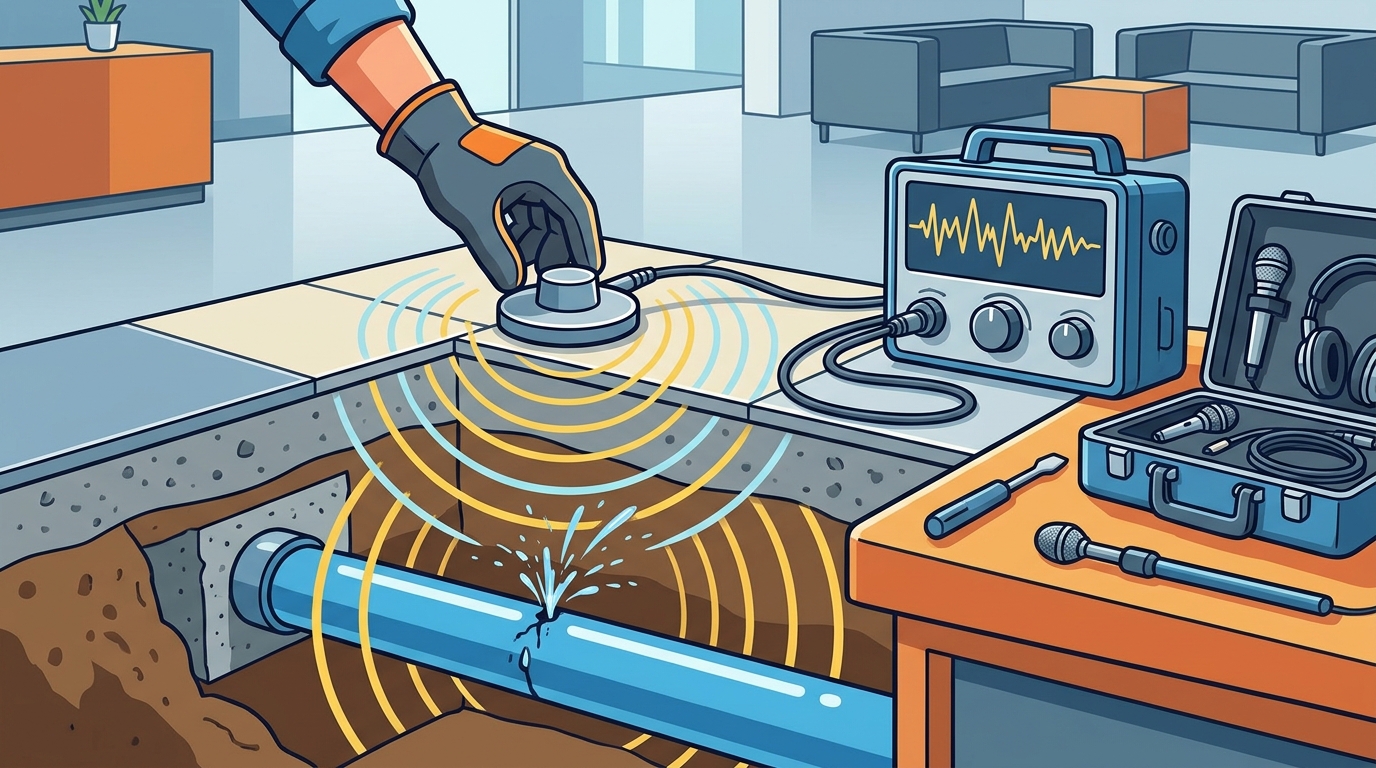
Acoustic leak detection is a non-invasive method that uses sensitive microphones to listen for the sound of escaping water. It works by amplifying the noise created when pressurized water leaks through a pipe, allowing engineers to pinpoint the exact location of the fault. This technique is highly effective for identifying hidden leaks in walls, floors, and underground pipes without causing unnecessary damage to your property.
The Physics of Sound in Pressurized Systems
When water escapes from a pressurized pipe, it creates a distinct noise. This sound is generated by the friction of water moving through a small gap or hole in the pipe material. The frequency and intensity of this sound depend on the water pressure and the size of the leak. Higher pressure systems typically produce louder, higher-frequency sounds that are easier to detect from a distance.
Modern acoustic detection equipment uses digital signal processing to filter out background noise. This is crucial in urban environments where traffic and other ambient sounds can mask the subtle hiss of a leak. By isolating specific frequency bands, engineers can distinguish the leak noise from surrounding interference. This precision is what makes acoustic detection a reliable primary tool in the industry.
Equipment Types and Sensitivity
There are different levels of acoustic equipment used in the field. The most basic tool is a listening stick, which is a simple metal rod with a microphone at one end. While useful for large leaks on street mains, it lacks the sensitivity needed for complex domestic properties. It is easily overwhelmed by ambient noise and cannot pinpoint small leaks accurately.
The Role of Acoustic Detection in UK Leak Detection
At UK Leak Detection, we utilize new-generation digital acoustic systems. We do not rely on a single piece of equipment to find every leak. Instead, we use acoustic detection as part of a multi-method approach. This ensures that the findings are verified and accurate. Our engineers are trained to interpret the data from these digital systems effectively.
We often combine acoustic detection with other technologies like thermal imaging. This cross-verification process is critical for complex cases. It helps us confirm the leak location before any invasive work is considered. This approach minimizes the risk of unnecessary damage to your home. It also provides strong evidence for insurance claims.
Limitations and Environmental Factors
Acoustic detection is not a magic solution that works in every scenario. It requires a pressurized system to generate sound. If the water pressure is too low, the leak may not produce enough noise to be detected. Additionally, certain pipe materials can dampen the sound. Older cast iron pipes, for example, may transmit sound differently than modern plastic pipes.
Environmental conditions also play a role. High levels of background noise can make detection difficult. Engineers must often wait for quieter periods or use advanced filtering to overcome this. Understanding these limitations is important for setting realistic expectations. It is why a professional assessment is necessary rather than a DIY approach.
Accuracy and Verification Processes
Accuracy in leak detection is paramount. A single method may provide a strong indication, but it is not always definitive. This is why best practice involves confirming the leak with at least two different methods. Acoustic detection provides the location, while other tools like moisture mapping or thermal imaging confirm the presence of water.
This dual-verification process is a standard in professional leak detection. It reduces the chance of false positives. It also helps in determining the extent of the damage. For insurance purposes, having multiple forms of evidence is often required. It strengthens the claim and speeds up the approval process.
Key Takeaways
- Acoustic leak detection uses microphones to listen for the sound of escaping water.
- Digital systems offer superior sensitivity and noise filtering compared to basic tools.
- High water pressure is generally required for effective acoustic detection.
- Professional firms use multiple methods to verify findings and ensure accuracy.
- Background noise and pipe material can affect the success of acoustic detection.
- Cross-verification with other technologies is essential for complex domestic leaks.
Frequently Asked Questions
Can acoustic detection find all types of leaks?
No, acoustic detection is most effective for pressurized leaks. It may not detect leaks in unpressurized systems or very small leaks in low-pressure environments. Other methods may be required in these cases.
Is acoustic detection invasive?
No, it is a non-invasive method. It does not require cutting into walls or lifting floors. It is performed externally on the property or on exposed pipework.
How accurate is acoustic leak detection?
When performed by a trained engineer using quality equipment, it is highly accurate. However, it is often used in conjunction with other methods to confirm the exact location and extent of the leak.
Does it work in noisy environments?
Modern digital systems have advanced noise filtering capabilities. While high ambient noise can be a challenge, engineers can often isolate the leak sound using specific frequency filters.
What is the difference between a listening stick and a digital detector?
A listening stick is a basic tool with limited sensitivity. A digital detector uses software to filter noise and visualize sound waves, offering much greater precision and ease of use.
Can I use acoustic detection myself?
While basic tools are available, professional equipment and training are required for accurate results. Misinterpreting the data can lead to incorrect conclusions and unnecessary damage.
How long does an acoustic survey take?
The time required depends on the complexity of the property and the location of the leak. A simple survey may take an hour, while complex cases can take several hours.
Conclusion
Acoustic leak detection is a vital tool in the modern engineer's kit. It offers a non-invasive way to locate hidden leaks with high precision. Understanding how it works helps you appreciate the skill and technology involved in the process. For homeowners in London and the Home Counties, choosing a specialist who uses advanced digital systems is key to a successful outcome. to discuss your specific leak detection needs.