
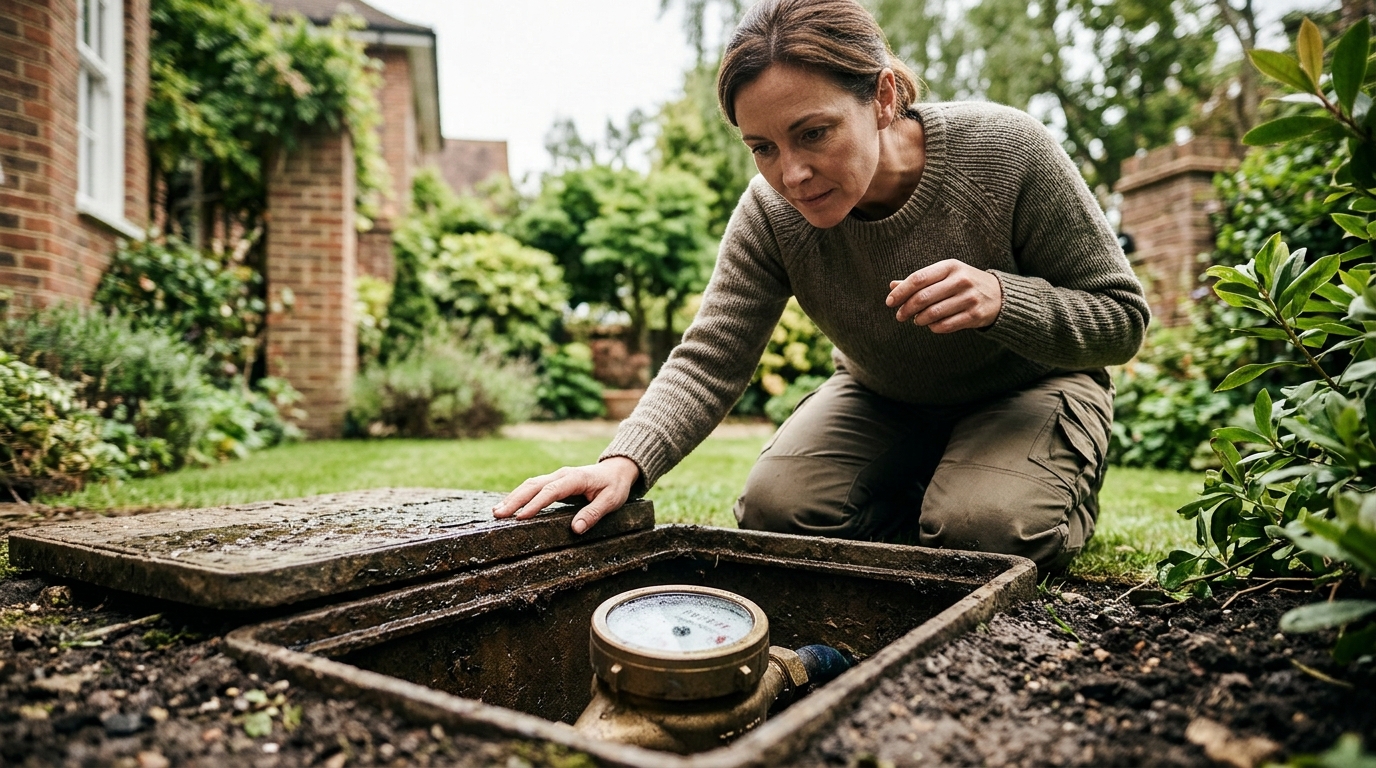
Reading your water meter is the most reliable way to confirm a hidden leak. If the meter registers movement while all water taps and appliances are off, water is escaping somewhere in your property. UK Leak Detection engineers use this exact baseline check before deploying advanced non-invasive technology to pinpoint the exact source of the loss.
Preparing Your Property for a Meter Test
Before you begin, you must ensure that no water is being used anywhere in the building. A water meter is a mechanical or digital device that records the volume of water entering your property. To get an accurate reading, you need to eliminate all active consumption. This includes flushing toilets, running washing machines, or filling kettles. Even a dripping tap or a running dishwasher can mask a hidden leak or create a false positive.
Locate your meter, which is typically found in a ground-level cupboard, an external box near the curb, or inside a basement. If the meter is in a cold room or an external box, it may be frozen during winter. In these cases, the test is invalid until the meter thaws. Once you have located the device, note the current reading. For mechanical meters, look at the black dials. For digital meters, note the total volume displayed in cubic meters.
Performing the Static Meter Test
The static test is the core of the detection process. After recording your initial reading, you must wait for a period of time without using any water. A standard waiting period is between 30 minutes and two hours. The longer you wait, the more sensitive the test becomes to very small leaks. During this time, ensure that no one in the household uses water, even for a quick rinse or to check a tap.
When the waiting period is over, return to the meter and take a second reading. If the numbers have not changed, there is no active leak in your system. If the numbers have increased, water has been consumed or lost. A small increase, such as a few liters, might indicate a minor drip. A large increase suggests a significant leak, such as a burst pipe or a running toilet. This simple check provides the evidence needed to determine if further investigation is required.
Interpreting Your Meter Readings
Understanding what the meter is telling you is crucial. A water meter is designed to measure flow, not just total volume. On many mechanical meters, there is a small red disc or a small wheel that spins when water is flowing. This is the leak indicator. If this indicator is moving while all taps are off, you have a leak. This is a definitive sign that water is escaping, even if the main black dials have not yet moved enough to register a full liter.
If the main dials have moved, calculate the difference between your first and second reading. For example, if your first reading was 120.5 and your second reading was 120.8, you have lost 0.3 cubic meters, or 300 liters, during the test period. This volume of water is significant. It means water is actively leaving your property. This data point is essential when speaking with a specialist, as it quantifies the severity of the issue.
Common Causes of Meter Movement
When a meter shows movement, the leak is usually located in one of three areas. The first is a running toilet. This is the most common cause of hidden water loss. A faulty flapper valve can allow water to seep from the tank into the bowl continuously. The second is a leaking tap or hose connection. A slow drip from an outdoor hose bib or a kitchen tap can waste hundreds of liters a day. The third is a hidden pipe leak. This is the most dangerous type, as it can damage structural elements like floors and walls before it is visible.
Hidden pipe leaks are often located under concrete screeds or within cavity walls. These areas are difficult to inspect visually. A meter test confirms that a leak exists, but it does not tell you where it is. This is where professional expertise becomes necessary. Without knowing the location, you cannot repair the leak, and the damage will continue to spread.

When to Call a Specialist
If your meter test confirms a leak, the next step is to locate it. You can start by checking obvious sources like toilets and taps. If you rule these out, the leak is likely in a concealed pipe. At this point, DIY methods are no longer sufficient. You need a professional who can use non-invasive technology to find the leak without destroying your floors or walls. UK Leak Detection provides this service, using tools like thermal imaging and acoustic detection to pinpoint the exact source.
Acting quickly is important. The longer a hidden leak runs, the more damage it causes. Water can weaken timber, promote mold growth, and damage electrical systems. By using your water meter to confirm the leak, you have taken the first critical step. The next step is to engage a specialist to find and fix the problem before it becomes a major structural issue. according to How to Check
Key Takeaways
- A water meter is the most accurate tool for confirming a hidden leak.
- Ensure all water taps and appliances are off before starting the test.
- Wait at least 30 minutes between readings to detect small leaks.
- Check the red leak indicator on mechanical meters for subtle movement.
- A running toilet is the most common cause of meter movement.
- Concealed pipe leaks require professional non-invasive detection.
- Act quickly to prevent structural damage and high water bills.
Frequently Asked Questions
How long should I wait between meter readings?
You should wait at least 30 minutes. For a more sensitive test, wait two hours. The longer the wait, the easier it is to detect small leaks.
What if my meter is frozen?
If your meter is frozen, you cannot perform a valid test. Wait until the meter thaws completely before taking readings.
Does a moving red disc always mean a leak?
Yes, if all water taps and appliances are off, a moving red disc indicates that water is flowing through the meter, which means there is a leak.
Can I find the leak myself?
You can find obvious leaks like running toilets. However, hidden pipe leaks under floors or in walls require professional equipment to locate accurately.
What should I do if the meter shows a leak?
First, check for obvious sources like toilets and taps. If you cannot find the source, contact a specialist leak detection service to locate the hidden leak.
How much water can a hidden leak waste?
A small hidden leak can waste hundreds of liters per day. A larger leak can waste thousands of liters, leading to significant water bills and property damage.
Conclusion
Your water meter is a powerful diagnostic tool. By performing a simple static test, you can confirm whether a hidden leak is present in your property. This evidence is the first step in protecting your home from water damage. If your meter indicates a leak that you cannot locate yourself, it is time to call in the experts. UK Leak Detection offers specialized services to find and resolve hidden leaks with minimal disruption to your property. To arrange a professional assessment, . according to Check for Water