
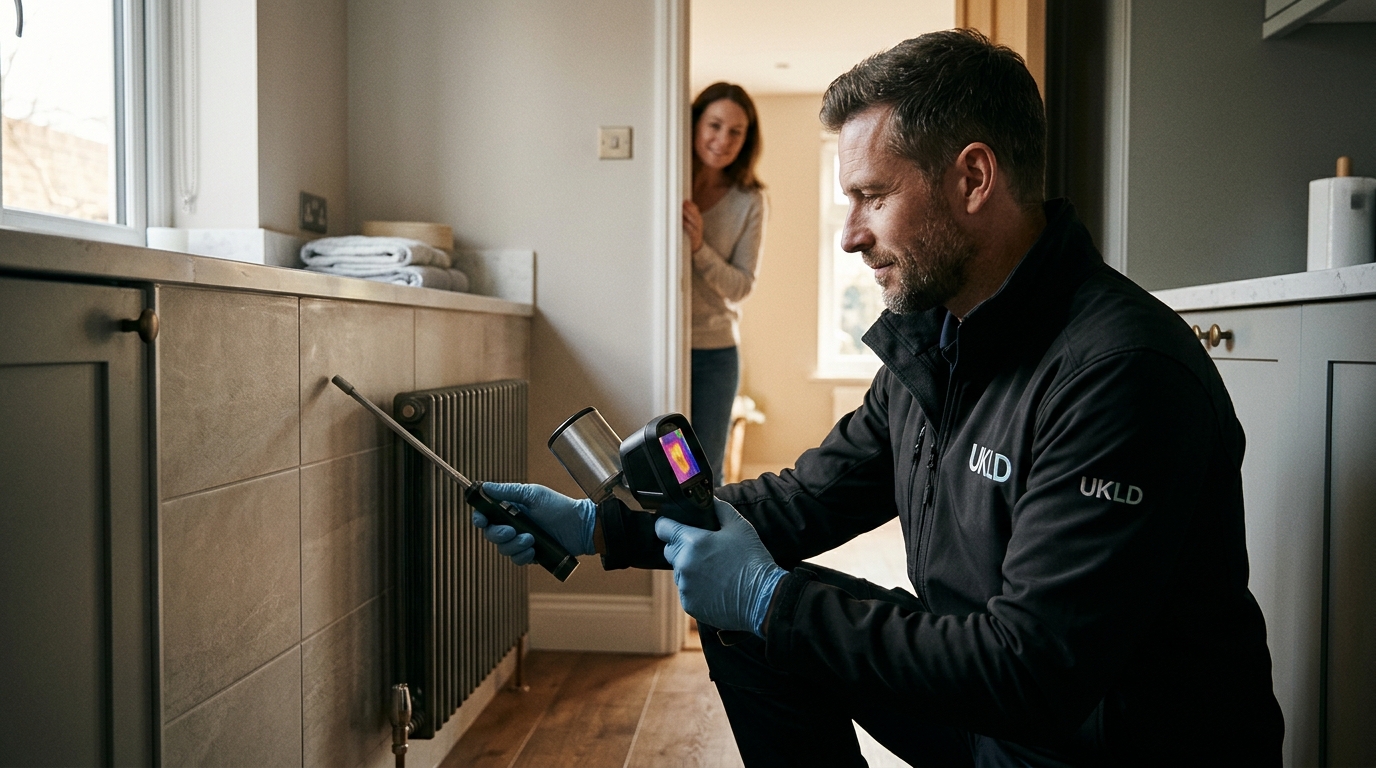
Leak detection services help prevent future water damage by locating hidden leaks before they cause structural decay, mould growth, or financial loss. UK Leak Detection uses advanced non-invasive technology to identify the exact source of moisture, allowing for targeted repairs rather than destructive guesswork. This guide covers how early identification, advanced technology, and insurance integration work together to protect your property. according to Leak Facts WaterSense
Early Leak Identification
Water damage is often invisible until it becomes severe. A hidden leak can remain undetected for weeks or even months, particularly when it occurs beneath floors, underground, or outside the property. Early leak identification is the most effective way to prevent minor drips from becoming major structural failures. According to the US EPA, a family of four with a serious leak problem may use over 12,000 gallons of water per month in winter, highlighting the scale of waste that goes unnoticed US EPA.
Most internal water leaks are not burst pipes but small, slow leaks that saturate sub-flooring over time. Internal water leaks are the cause of 90% of insurance water damage claims, yet very few are dramatic bursts. Most pipework is buried under concrete screed or in cavities and cannot be maintained. By identifying these leaks early, homeowners can stop the damage before it spreads to walls, foundations, or neighbouring properties. according to Fixing Leaks At
Signs of a Hidden Leak
You may only become aware of a problem when specific indicators appear. These include a sudden increase in your water bill, a water meter that continues running when nothing is in use, or a suspected leak notice from your water supplier. Other clues include damp patches, staining, mould growth, unexpected drops in water pressure, or flooring that feels damp or warm. Cracks or movement around the property can also signal underlying moisture issues.
Underground supply pipes can leak without producing any obvious surface signs. Left unresolved, the escaping water may damage flooring, walls, foundations, and surrounding land. Acting quickly is essential. When you realise you have a leak, turn off the water before trying to tackle it. Remember that there is a good bucket full of water held in the pipework. If you cannot see the leak, calling a specialist is the safest course of action.
Advanced Technology and Accuracy
Traditional methods of finding leaks often involve randomly lifting floors or digging up driveways. This approach is destructive, expensive, and often fails to find the source. Non-invasive leak detection is a process that uses specialist diagnostic equipment to locate leaks without causing unnecessary damage to the property. UK Leak Detection engineers use a combination of technologies to confirm a leak with high accuracy.
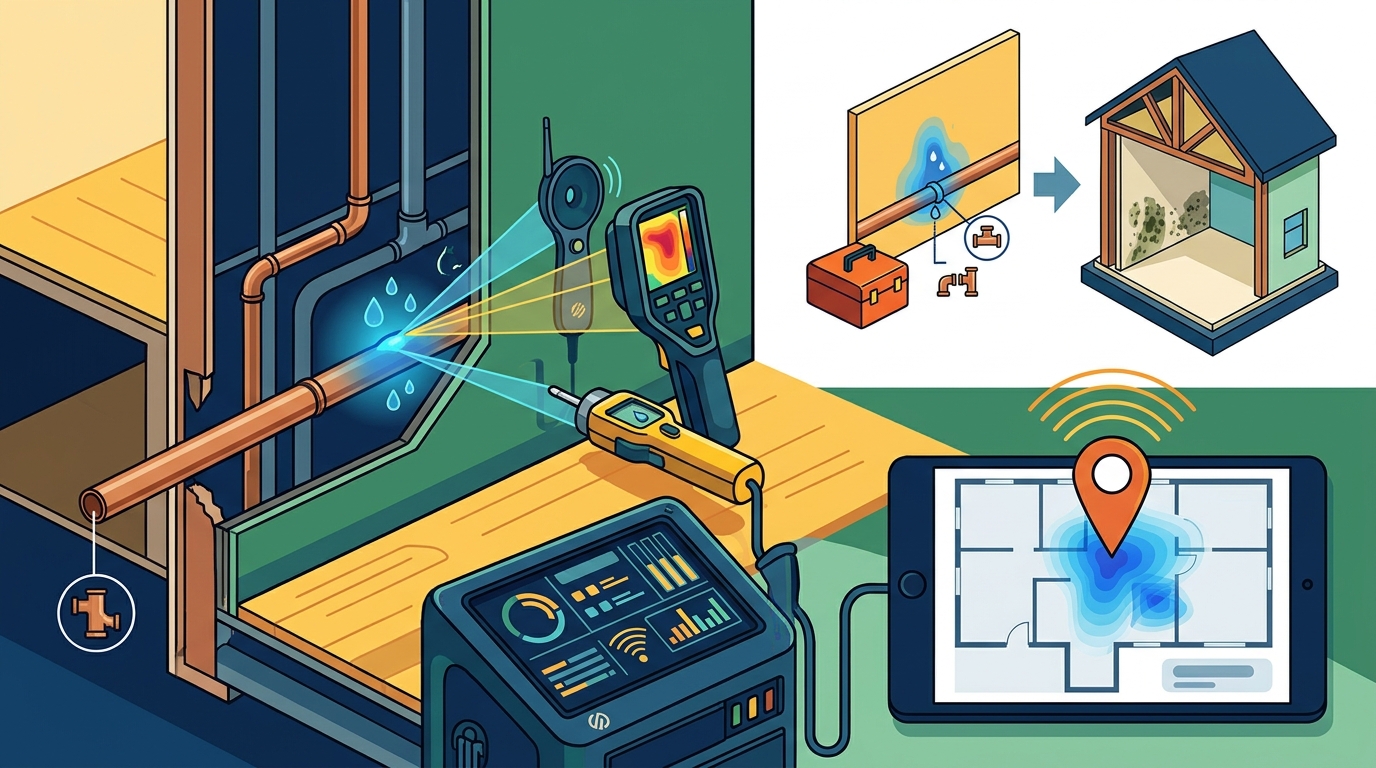
For accuracy, UK Leak Detection endeavours to confirm a leak with two methods of leak detection. No single piece of equipment can find every leak. By using multiple technologies, engineers can pinpoint the exact location of the leak, minimising excavation and repair costs.
Thermal Imaging
Thermal imaging is a non-destructive method that uses a specialised camera to detect temperature variations on surfaces. When water leaks occur, they cool or heat the surrounding materials. A thermal imaging camera detects infrared radiation and converts it into a visible image, showing temperature differences as small as 0.1 degrees Celsius. This technology is particularly useful for tracing pipework and detecting water leaks in concealed areas such as walls, floors, and ceilings.
Acoustic Detection and Tracer Gas
Acoustic leak detection uses microphones to amplify the quiet sounds of escaping water. Modern digital systems allow engineers to slice noise into frequencies, reducing spurious noise like traffic. Tracer gas is used for underground mains leaks and external supply pipe leaks. This method is highly effective for high water bill investigations where the leak is not visible on the surface.
| Technology | Primary Use | Best For |
|---|---|---|
| Thermal Imaging | Detecting temperature anomalies | Walls, ceilings, and underfloor heating |
| Acoustic Detection | Listening to leak noise | Pressurised pipes and radiators |
| Tracer Gas | Tracking gas escape | Underground mains and external pipes |
Insurance and Trace & Access
Dealing with a leak in your home often involves the term "Trace and Access." This sounds self-explanatory: you need to locate (trace) the leak and then get to it to repair (access). However, when dealing with an insurance claim for water damage, this process becomes complicated. A professional specialist leak detection company is the best method for locating a leak and dealing with insurers.
Trace and Access is an insurance cover that pays for the costs of locating a hidden leak and accessing it for repair. A good insurance policy will include this cover, normally for £5000. This covers the costs of leak detection and any damage caused in accessing the leak. Insurers have a limit of cover and do not pay for speculative works without a proven reason to cause damage. It is no good lifting floors in the hope of finding the leak in the expectation that the insurer will pay for the works.
UK Leak Detection provides photographic reports and recommendations that support your insurance claim. The insurer will only cover trace and access after the damage has been caused by the leak. However, the leak is often hidden, and it becomes impossible to prove without specialist equipment. We can use our leak detection technology to locate these hidden leaks and detect damage not visible to the naked eye. Water damage from underground leaks is like an iceberg, and you may only see 10% of the leak damage.
Prevention Strategies for Homeowners
While professional detection is crucial when a leak is suspected, proactive maintenance can prevent many issues. Water damage prevention is a strategy that involves regular monitoring and maintenance of your property's plumbing and heating systems. By understanding how your home works, you can identify potential problems before they escalate.
Monitoring Your Water Meter
If you have a water meter, you can detect even small water leaks. These are indicated by the small wheel in the middle, and every digit in the red section is 1 litre. Check your meter when no water is being used. If the wheel is moving, you likely have a leak. Know where your stop cocks and isolators are and make sure they work. Often, customers do not know how to turn the water off in an emergency, or the stop cock is jammed and does not work.
Heating System Maintenance
Central heating systems contain an inhibitor that helps protect the pipework and radiators from corrosion. Adding fresh water repeatedly dilutes this protection and can lead to corrosion, blockages, and costly damage. If your boiler pressure keeps dropping, you may have a hidden leak. Repeatedly topping up the boiler may restore pressure temporarily, but it does not solve the underlying problem. Finding the leak early helps protect your heating system and reduce disruption to your home.
Do not ignore pipework in poor condition. It is likely holding as much pressure as is in a car tyre, and even the smallest of internal leaks will over time cause a huge amount of damage. When making additions, make sure that any internal installation is done competently. Copper pipework in concrete should be lagged to protect it from the corrosive lime in concrete, and plastic pipe should be supported, particularly at joints.
Key Takeaways
- Early leak identification prevents minor drips from becoming major structural failures.
- Internal water leaks cause 90% of insurance water damage claims.
- Non-invasive technology minimises property damage during the investigation.
- Trace and Access cover is essential for insurance claims involving hidden leaks.
- Monitoring your water meter can reveal small leaks before they cause damage.
- Repeatedly topping up boiler pressure dilutes system inhibitors and causes corrosion.
- Professional reports provide the evidence insurers need to approve claims.
Frequently Asked Questions
How does leak detection prevent future water damage?
Leak detection prevents future water damage by locating the exact source of a leak before it spreads. This allows for targeted repairs rather than destructive guesswork, saving money and protecting the structural integrity of the property.
Is leak detection covered by insurance?
Many home insurance policies include Trace and Access cover, which may help pay for locating and accessing a hidden leak. UK Leak Detection can provide a report to support your claim.
What technologies are used in leak detection?
Common technologies include thermal imaging, acoustic detection, and tracer gas. UK Leak Detection uses a combination of these methods to confirm a leak with high accuracy.
Can I find a leak myself?
You can check your water meter for small leaks, but hidden leaks beneath floors or underground require specialist equipment. If you cannot see the leak, it is best to call a professional.
How much does water damage repair cost?
The cost depends on the extent of the damage. A simple leak from a bathroom to the ceiling below might cost about £2000 to repair, while a leak affecting a kitchen and tiled walls could cost £10000. Locating, accessing, and drying the area is 90% of the cost.
What should I do if my boiler pressure keeps dropping?
If your boiler pressure keeps dropping, you likely have a hidden leak in your central heating system. Repeatedly topping up the system dilutes the inhibitor and can cause corrosion. A specialist can locate the leak to protect your heating system.
Conclusion
Leak detection services are a vital tool for preventing future water damage. By using advanced non-invasive technology, UK Leak Detection can locate hidden leaks quickly and accurately, minimising disruption to your property. Early identification, combined with proper insurance coverage and proactive maintenance, ensures that your home is protected from the costly consequences of water damage. If you suspect a leak, acting fast is the best way to save money and protect your property.
To arrange a professional investigation, contact UK Leak Detection today.