
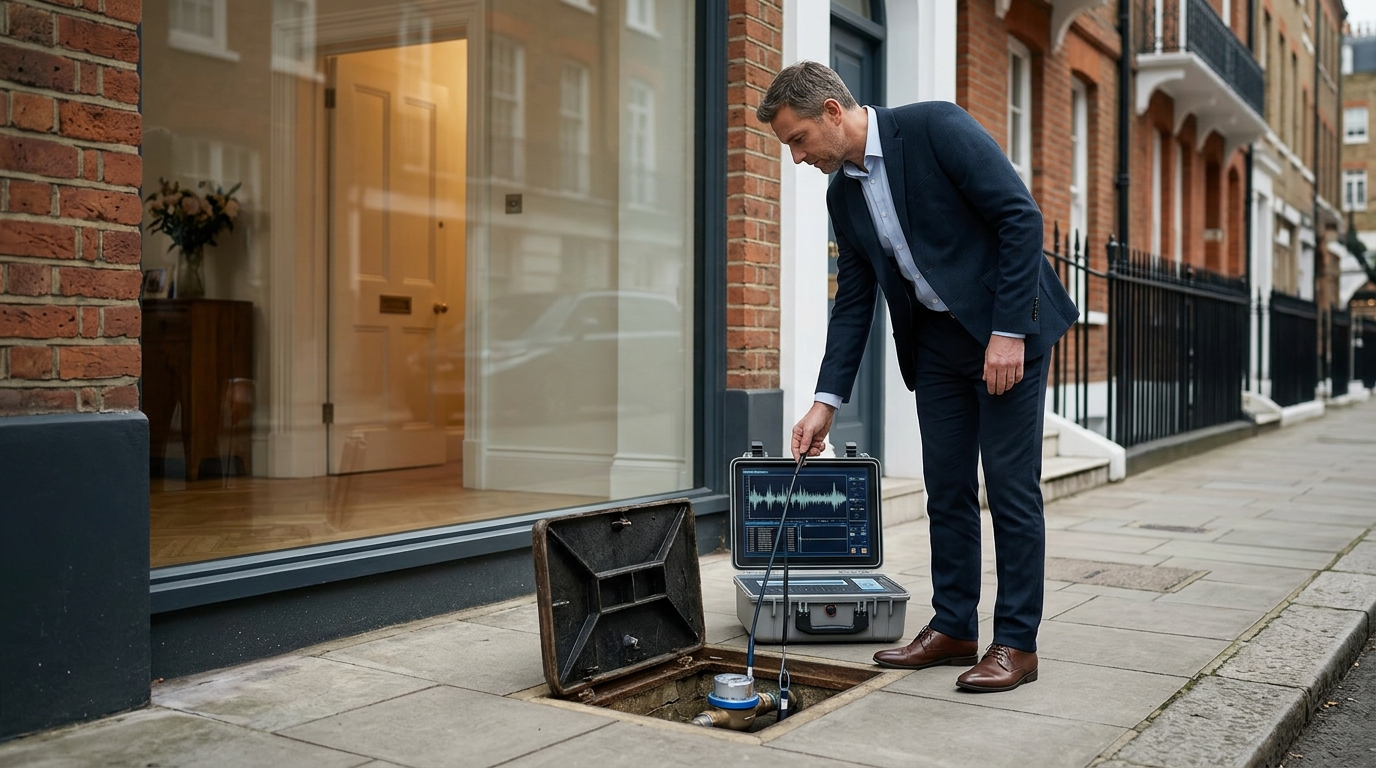
Independent proof that you do not have a leak is obtained through a certified non-invasive leak detection survey conducted by a specialist engineer. This guide explains how to challenge a water company's leak notice in London using technical evidence, meter testing, and professional diagnostics. It covers the role of approved plumbers, the science of meter testing, and how to secure a definitive report for your insurer or water supplier.
Understanding the Leak Notice
Water companies in London, such as Thames Water, monitor consumption data to identify potential leaks. A leak notice is often triggered when your meter usage exceeds a specific threshold over a set period. This is an automated or semi-automated process based on statistical averages, not a physical inspection of your property. The notice is a request for you to investigate, not a confirmed diagnosis of a burst pipe. according to Fixing Leaks At
Many homeowners receive these notices due to high usage from appliances, guests, or irrigation, rather than an actual leak. However, ignoring the notice can lead to increased water bills or further investigation by the utility. The most effective way to resolve this is to obtain independent, technical evidence that proves the integrity of your pipework. This evidence must be generated by a qualified professional using industry-standard diagnostic tools.
WaterSafe Approved Plumbers
WaterSafe approval is a certification scheme that verifies the competence and insurance status of plumbing and heating professionals in the UK. While a standard plumber can repair a visible leak, they are often not equipped to diagnose hidden leaks or provide the technical evidence required to dispute a water company's claim. A WaterSafe approved plumber is a good first step for visible repairs, but for hidden leaks, you need a specialist.
The Limitation of General Plumbers
General plumbers typically use visual inspection and basic pressure tests. If a pipe is hidden behind a wall or under a concrete floor, a general plumber cannot locate it without destructive access. Destructive access, such as chipping away concrete, is rarely covered by insurance unless a leak is first proven by a specialist. Therefore, relying solely on a general plumber may result in unnecessary damage and costs.
Specialist Leak Detection Engineers
UK Leak Detection engineers are specialists in non-invasive leak detection. They use advanced technology to locate leaks without damaging your property. Their reports are designed to meet the evidentiary standards of both water companies and insurance providers. When you need independent proof that a leak does not exist, or to pinpoint exactly where it is, a specialist engineer provides the definitive answer that a general plumber cannot.
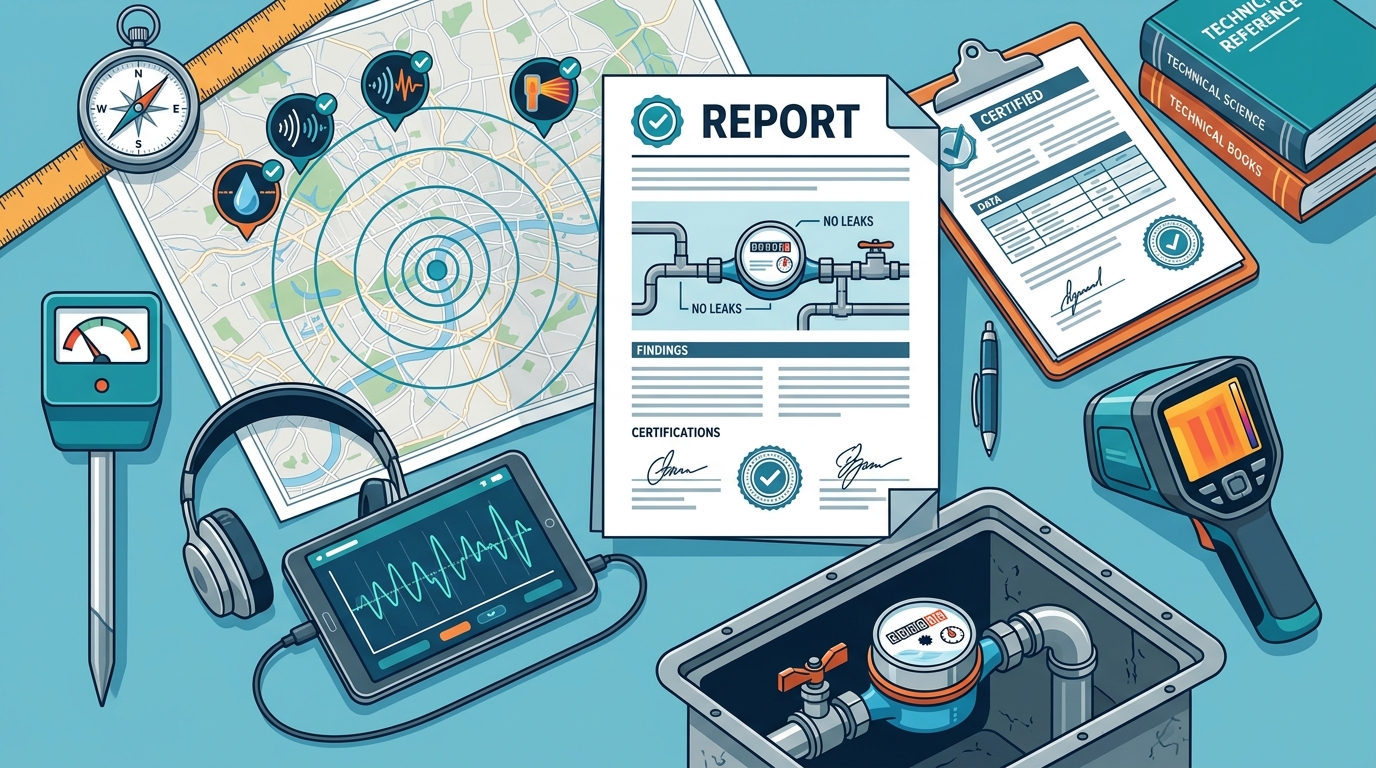
Meter Testing Procedures
Static meter testing is a diagnostic procedure that measures water consumption when all taps and appliances are turned off. This is the primary method water companies use to suspect a leak. If the meter continues to register usage during a static test, it indicates that water is escaping somewhere in the system. However, a moving meter does not automatically prove a leak; it can also indicate a faulty meter or a slow drip in a toilet cistern.
How to Conduct a Static Test
To perform a basic static test, ensure all water outlets are closed. Check the meter's small red wheel or digits. If they are moving, there is water flow. Wait 15 to 30 minutes and check again. If the movement continues, you have a potential leak. This test is useful for identifying obvious issues but lacks the precision to locate the source. It is a starting point, not a conclusion.
Professional Meter Analysis
Professional leak detection engineers go beyond a simple static test. They use acoustic correlation and pressure testing to analyze the meter's behavior. They can distinguish between a slow leak in a buried pipe and a mechanical fault in the meter itself. This detailed analysis provides the independent proof needed to challenge a water company's notice. If the meter is faulty, the engineer can provide a report to have it replaced or recalibrated.
Non-Invasive Detection Technology
Modern leak detection relies on a combination of non-invasive technologies. No single tool can find every leak, so specialists use a multi-method approach to confirm their findings. This ensures that the evidence provided is robust and defensible. The three primary technologies used are thermal imaging, acoustic detection, and tracer gas.
Thermal Imaging
Thermal imaging uses infrared cameras to detect temperature variations on surfaces. Water leaks often cause a change in temperature, appearing as a cooler or warmer area on the camera's display. This is particularly useful for locating leaks in walls, ceilings, and under floors. It is a non-destructive method that helps map the extent of the damage.
Acoustic Detection
Acoustic detection uses sensitive microphones to listen for the sound of escaping water. When water leaks under pressure, it creates a noise that can be amplified and analyzed. Digital acoustic systems can filter out background noise, allowing engineers to pinpoint the exact location of a leak in buried pipes. This is the gold standard for locating underground mains leaks.
Tracer Gas
Tracer gas detection involves introducing a safe, inert gas into the pipework. The gas escapes through the leak and is detected by a sensitive sensor. This method is highly effective for micro-leaks that do not produce enough noise for acoustic detection. It is a precise and non-invasive way to confirm the presence and location of a leak.
| Technology | Best Used For | Limitations |
|---|---|---|
| Thermal Imaging | Walls, ceilings, under floors | Requires temperature differential; can be affected by insulation |
| Acoustic Detection | Buried pipes, pressurized systems | Can be overwhelmed by ambient noise; requires access to pipe |
| Tracer Gas | Micro-leaks, complex systems | Requires system isolation; more expensive |
Insurance and Trace & Access
If you believe you do not have a leak, you can use the specialist report to prove that the water company's notice was incorrect. This can help you avoid unnecessary repairs and protect your insurance record. If a leak is found, the report helps you claim the full Trace and Access cover, ensuring that the cost of the investigation is covered by your insurer.
Key Takeaways
- A water company leak notice is based on data, not physical inspection.
- WaterSafe approved plumbers are good for repairs but may lack diagnostic tools for hidden leaks.
- Static meter testing is a basic check but does not locate the leak source.
- Specialist engineers use thermal imaging, acoustic detection, and tracer gas for accurate diagnosis.
- Non-invasive methods minimize damage and provide defensible evidence.
- Trace and Access insurance cover requires professional proof of a leak.
- UK Leak Detection provides independent, evidence-based reports for London homeowners.
Frequently Asked Questions
Can I dispute a water company leak notice?
Yes, you can dispute a notice by providing independent evidence from a specialist leak detection engineer. If the engineer confirms no leak exists, you can submit the report to the water company to close the case.
Do I need a WaterSafe approved plumber for this?
While a WaterSafe approved plumber is qualified for repairs, a specialist leak detection engineer is better suited for diagnosing hidden leaks and providing the technical evidence needed to dispute a notice.
What is a static meter test?
A static meter test measures water usage when all taps are off. If the meter moves, it indicates a potential leak or faulty meter. It is a basic diagnostic tool.
How accurate is thermal imaging for leak detection?
Thermal imaging is highly accurate for locating leaks in walls and ceilings. It detects temperature changes caused by water. It is often used in combination with other methods for confirmation.
Will my insurance cover the cost of leak detection?
Most buildings insurance policies include Trace and Access cover, which pays for leak detection and access. You must provide proof of a leak to claim this cover.
What if the leak is underground?
Underground leaks are best located using acoustic detection or tracer gas. These methods are non-invasive and can pinpoint the exact location without digging.
Conclusion
Receiving a leak notice from your water company can be stressful, but you have the right to independent verification. By using a specialist leak detection service, you can obtain the technical evidence needed to prove whether a leak exists. UK Leak Detection offers expert, non-invasive leak detection services across London, providing clear, defensible reports that help you resolve disputes with water companies and insurers. To arrange a survey, .