

Where Can a Landlord Find a Hidden Water Leak in London UK?
Landlords in London can find hidden water leaks by checking water meters, inspecting for visual signs, and using professional non-invasive detection technology. This guide covers the specific locations where leaks hide, the signs to look for, and how to secure evidence for insurance claims. It provides a step-by-step approach to identifying leaks in multi-occupancy buildings and private rentals.
Water Meter Checks
Water meter checks are the first diagnostic step for identifying hidden leaks. A water meter is a device that records the volume of water consumed by a property. If the meter is turning when all taps and appliances are off, a leak is likely present. This method is particularly effective for detecting slow leaks in underground pipes or behind walls.
How to Perform a Meter Check
Turn off all water sources in the property, including washing machines, dishwashers, and toilets. Record the meter reading. Wait for 15 to 30 minutes without using any water. Check the meter again. If the reading has increased, water is being lost somewhere in the system. In London, where water pressure can vary, a significant jump in the meter reading over a short period is a strong indicator of a leak.
Interpreting Meter Data
Some meters have a small dial or indicator that moves even with tiny amounts of water flow. If this indicator moves while the property is dry, it confirms a leak. Landlords should document these readings with photos and timestamps. This data is crucial for insurance claims and for guiding professional engineers. It helps distinguish between a slow drip and a major burst pipe.
Visual Inspection Signs
Visual inspection signs are the most common way landlords first notice a problem. However, hidden leaks often do not show obvious water on the floor. Instead, they manifest through subtle changes in the building fabric. Landlords should look for these indicators during routine inspections.
Wall and Ceiling Indicators
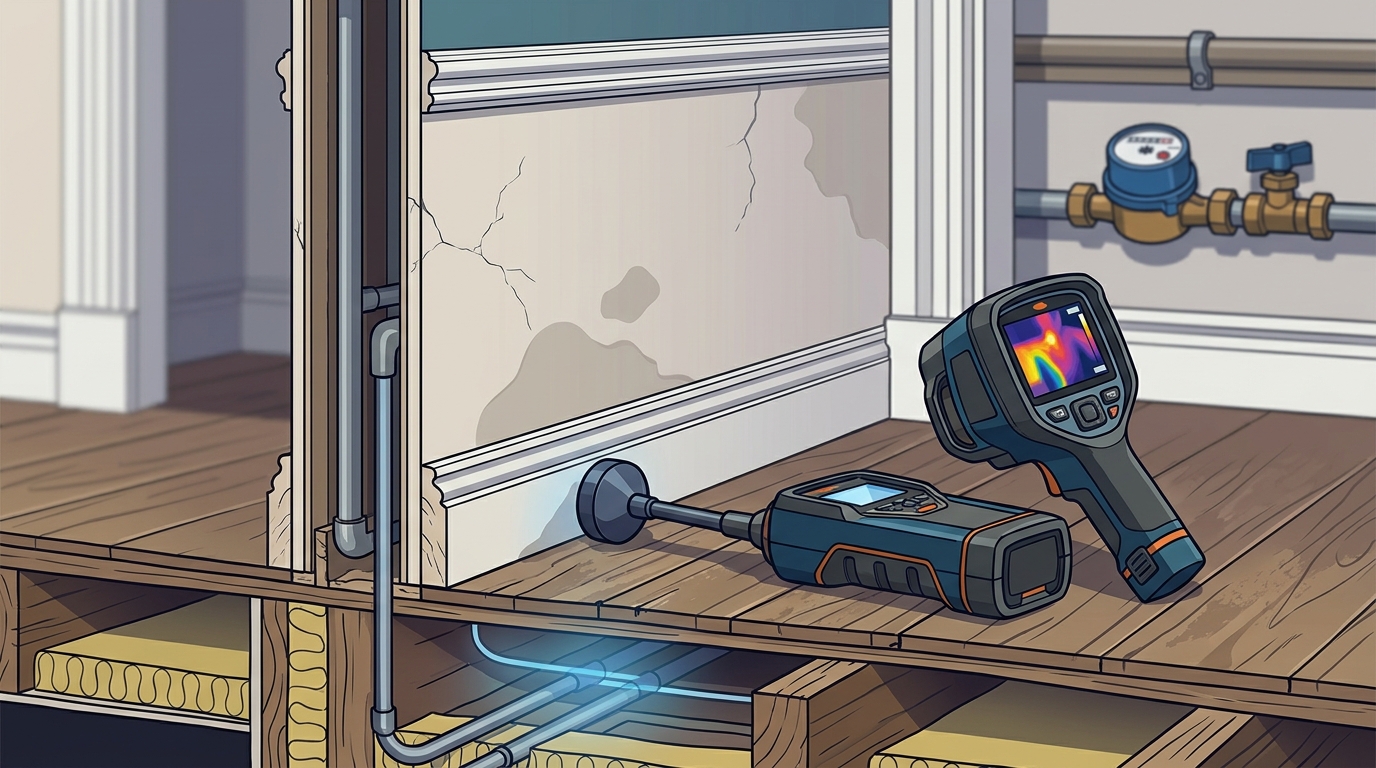
Look for discolored patches, bubbling paint, or peeling wallpaper. These signs suggest moisture behind the surface. In older London properties, rising damp can mimic leak damage, but a leak usually causes localized staining. Check for musty odors, which indicate mold growth due to persistent moisture. Condensation on windows may also point to high humidity levels caused by a hidden leak.
Flooring and Structural Signs
Warped, buckling, or soft flooring is a clear sign of water damage. In properties with suspended floors, check for dampness underneath. Concrete floors may show efflorescence, a white powdery residue left by evaporating water. Structural integrity can be compromised over time, so early detection is vital. Landlords should inspect baseboards and skirting boards for swelling or separation from the wall.
Common Leak Locations in London Properties
Understanding where leaks typically occur helps landlords focus their inspection efforts. London properties vary widely in age and construction, from Victorian terraces to modern flats. Each type has specific vulnerability points.
Plumbing and Heating Systems
Central heating leaks are common in older systems. Boiler pressure loss is a key symptom. If the boiler pressure drops frequently, a leak in the pipework or heat exchanger is likely. Underfloor heating systems can hide leaks beneath concrete or screed. These leaks are difficult to find without specialized equipment. Landlords should monitor boiler pressure gauges regularly.
Roof and External Ingress
Roof leaks are a major issue in London due to frequent rainfall. Check for damaged tiles, cracked flashing, or blocked gutters. Water can enter through small gaps and travel along rafters before appearing on the ceiling. External walls, especially in older brickwork, can suffer from penetrating damp. This is often mistaken for internal leaks but requires different remediation.
Professional Detection Methods
When visual and meter checks suggest a leak but the source is not obvious, professional detection is required. UK Leak Detection uses advanced non-invasive technology to locate leaks without damaging the property. This approach minimizes disruption for tenants and landlords alike.
Thermal Imaging and Acoustic Detection
Thermal imaging cameras detect temperature differences caused by water. Leaks often appear as cooler or warmer spots on walls and floors. Acoustic detection uses sensitive microphones to hear the sound of water escaping under pressure. This method is highly effective for pressurized pipe leaks. Engineers combine these methods to triangulate the exact location of the leak.
Tracer Gas and Pressure Testing
Tracer gas is a safe, inert gas injected into the system. It escapes through the leak and is detected by a specialized sensor. This method is ideal for micro-leaks that other techniques miss. Pressure testing involves isolating sections of the pipework and monitoring for pressure drop. This confirms the presence of a leak and helps narrow down the affected area. These methods provide the evidence needed for insurance claims.
Insurance and Evidence Requirements
Insurance claims for water damage require clear evidence of the leak and the resulting damage. Many policies include Trace and Access cover, which pays for locating and accessing the leak. However, insurers often require proof that the leak was not caused by neglect or wear and tear. Professional reports provide this evidence.
The Role of Independent Reports
Independent leak detection reports are crucial for supporting insurance claims. They document the leak location, cause, and extent of damage. These reports help insurers assess liability and approve repairs. Landlords should ensure their policy includes adequate Trace and Access cover. Some policies on comparison sites may exclude this cover to appear cheaper, so it is important to read the terms carefully.
Working with Insurers
Insurers may send a loss adjuster to assess the damage. Having a professional report ready can speed up the process. It also helps prevent disputes over the cause of the leak. Landlords should keep records of all communications and inspections. This documentation protects their interests and ensures a fair settlement.
Key Takeaways
- Water meter checks are the simplest way to detect hidden leaks. If the meter moves when all water is off, a leak is likely.
- Visual signs like discolored walls, warped floors, and musty odors are early indicators of hidden water damage.
- Common leak locations include central heating systems, roofs, and external walls, especially in older London properties.
- Professional detection methods like thermal imaging and tracer gas provide accurate, non-invasive leak location.
- Insurance claims require clear evidence. Professional reports support Trace and Access claims and help prevent disputes.
- Landlords should review their insurance policies to ensure adequate cover for hidden leaks and structural damage.
- Early detection minimizes property damage, reduces repair costs, and protects tenant safety.
- Working with independent specialists ensures accurate diagnosis and defensible evidence for insurers.
Frequently Asked Questions
How often should landlords inspect for leaks?
Landlords should inspect properties at least annually, and more frequently if tenants report issues. Regular checks of water meters and visual inspections can catch leaks early.
Can I find a leak myself?
You can identify signs of a leak using meter checks and visual inspection. However, locating the exact source often requires professional equipment and expertise.
What is Trace and Access cover?
Trace and Access cover is an insurance feature that pays for locating and accessing a hidden leak. It is essential for covering the costs of professional detection and initial repairs.
Are professional leak detection services expensive?
Costs vary depending on the complexity of the leak and the methods used. However, professional detection is often cheaper than the cost of extensive structural damage from an undetected leak.
Do I need to evict tenants for leak detection?
Usually, no. Non-invasive detection methods can be performed with minimal disruption. Tenants may need to provide access to specific areas, but full eviction is rarely necessary.
How long does leak detection take?
Most leak detection visits take a few hours. Complex cases may require multiple visits or additional testing. Engineers provide findings on the day where possible.
What should I do if my insurer denies a claim?
If your insurer denies a claim, request a detailed explanation. Provide professional leak detection reports as evidence. You may also consider using an independent claims handler to assist with the process.
Can hidden leaks cause health issues?
Yes. Hidden water damage can lead to mold growth, which can cause respiratory problems and other health issues. Early detection and remediation are important for tenant well-being.
Conclusion
Identifying hidden water leaks in London properties requires a combination of diligent inspection and professional expertise. Landlords should start with water meter checks and visual inspections to catch early signs. When the source is not obvious, professional detection methods provide the accuracy and evidence needed for repairs and insurance claims. UK Leak Detection offers independent, non-invasive services to help landlords protect their investments and ensure tenant safety. To plan your visit, for a consultation.