
Comparing Leak Detection Methods in London: The 2026 Ultimate Guide
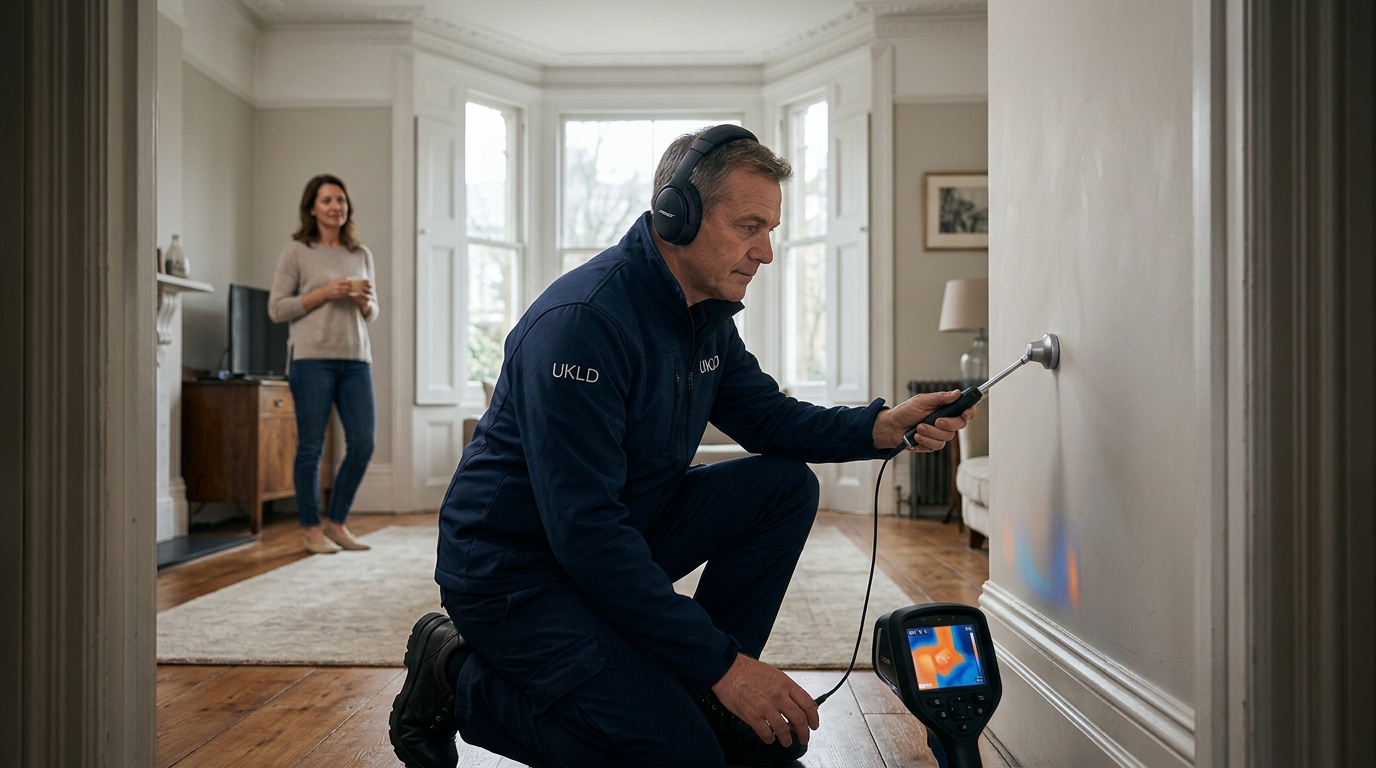
Leak detection is the process of identifying the exact location of a water leak using specialized diagnostic equipment. In London, the most effective approach combines multiple technologies, such as acoustic detection, thermal imaging, and tracer gas, to ensure accuracy. This guide compares the methodologies used by UK Leak Detection to help you understand how different services locate hidden leaks effectively.
Acoustic Detection: Listening for the Leak
Acoustic detection is a method that uses sensitive microphones to amplify the sound of escaping water. When water escapes under pressure, it creates a distinct noise that can be heard through walls, floors, and pipes. This technique is particularly effective for detecting leaks in pressurized systems, such as central heating and cold water mains.
Digital vs. Analogue Systems
Modern acoustic equipment has evolved significantly from basic listening sticks. Digital systems allow engineers to filter out ambient noise, such as traffic or wind, by isolating specific frequency ranges. This precision is crucial in a busy city like London, where background noise can easily mask the subtle sounds of a small leak.
Effectiveness in London Properties
In older London properties, acoustic detection can be challenging due to complex pipe runs and dense construction. However, when used correctly, it provides a direct confirmation of a leak's presence. UK Leak Detection engineers use high-quality digital acoustic equipment to pinpoint the exact location of the breach, minimizing the need for destructive investigation.
Thermal Imaging: Seeing Temperature Differences
Thermal imaging is a non-destructive technique that uses infrared cameras to detect temperature variations on surfaces. Water leaks cause the surrounding materials to cool or heat up, creating a visible anomaly on the thermal display. This method is ideal for locating leaks in walls, ceilings, and floors without opening them up.
How Infrared Cameras Work
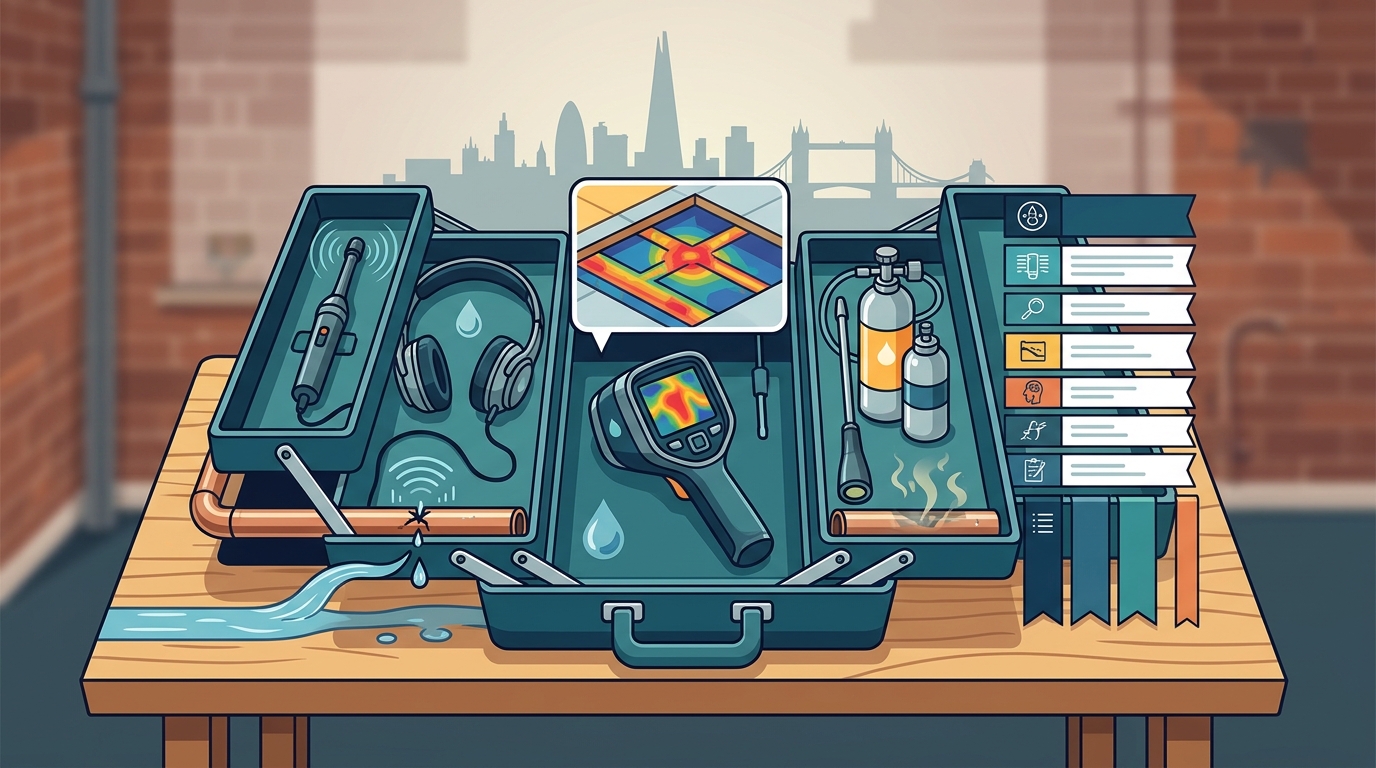
Thermal cameras detect infrared radiation emitted by objects and convert it into a visible image. They can identify temperature differences as small as 0.1 degrees Celsius. In the context of leak detection, a leak from a hot water pipe will appear as a warm spot, while a cold water leak will appear as a cooler area.
Limitations and Best Practices
While powerful, thermal imaging is not a standalone solution. It can be affected by external factors like sunlight, heating systems, and insulation. Therefore, it should be used in conjunction with other methods to confirm a leak. UK Leak Detection uses thermal imaging to map the extent of water damage and guide further testing.
Tracer Gas Detection: Precision for Underground Leaks
Tracer gas detection is a highly accurate method used to locate leaks in underground pipes and external supply lines. A harmless gas, usually helium or hydrogen, is injected into the pipe system. As the gas escapes through the leak, it is detected by a sensitive probe on the surface.
Why Tracer Gas is Essential
Underground leaks are often invisible and can cause significant damage to foundations and landscaping before they are detected. Tracer gas allows engineers to pinpoint the leak to within a few centimeters, reducing excavation costs and disruption. This method is particularly useful for investigating high water bills and leak notices from water suppliers.
Safety and Accuracy
The gases used are non-toxic and non-flammable in the concentrations used for leak detection. The high sensitivity of the detectors ensures that even small leaks can be found quickly. UK Leak Detection employs tracer gas technology as part of its comprehensive diagnostic toolkit to ensure accurate results.
Moisture Mapping: Assessing the Extent of Damage
Moisture mapping is the process of measuring the moisture content in building materials to determine the extent of water damage. This is done using non-invasive moisture meters that measure the electrical conductivity of materials. High moisture readings indicate areas that have been saturated by a leak.
Diagnosing Hidden Saturation
Water can travel far from the source of a leak, causing damage in unexpected areas. Moisture mapping helps engineers identify the full extent of the damage, which is crucial for planning repairs and insurance claims. It also helps distinguish between active leaks and residual moisture from previous issues.
Integration with Other Methods
Moisture mapping is often used alongside thermal imaging to create a comprehensive picture of the problem. By combining temperature and moisture data, engineers can confirm the location of the leak and assess the impact on the property. UK Leak Detection uses this integrated approach to provide clear, evidence-based reports.
Pressure Testing: Confirming System Integrity
Pressure testing is a fundamental step in leak detection that involves isolating a section of the pipe system and monitoring its pressure over time. If the pressure drops, it indicates a leak. This method is used to confirm the presence of a leak before more detailed location techniques are employed.
Boiler and Heating Systems
For central heating systems, pressure testing is essential to identify leaks in the boiler, radiators, or pipework. A drop in boiler pressure is a common sign of a hidden leak. UK Leak Detection performs pressure tests to isolate the problem area and guide further investigation.
Water Mains and Cold Water
Pressure testing is also used for cold water mains and internal pipework. By isolating sections of the system, engineers can determine which part of the network is leaking. This helps narrow down the search area and improves the efficiency of the detection process.
Service Combination Strategies: The Multi-Method Approach
No single technology can find every leak. The most effective leak detection services use a combination of methods to ensure accuracy. This multi-method approach allows engineers to adapt their strategy based on the specific circumstances of the property and the type of leak. according to Leak Facts WaterSense
Why Combination is Key
Each technology has its strengths and limitations. Acoustic detection is great for pressurized leaks, while thermal imaging is ideal for visualizing temperature changes. Tracer gas is essential for underground leaks, and moisture mapping assesses the extent of damage. By combining these methods, engineers can confirm a leak with high confidence.
The UK Leak Detection Approach
UK Leak Detection engineers are trained to use a range of advanced technologies, including thermal imaging, acoustic detection, moisture mapping, trace gas detection, and borescope cameras. This comprehensive toolkit allows them to locate leaks quickly and accurately while minimizing disruption to your property. Their multi-method approach ensures that they can handle a wide variety of leak scenarios, from simple internal leaks to complex underground mains issues.
Comparison of Leak Detection Methods
| Method | Best For | Advantages | Limitations |
|---|---|---|---|
| Acoustic Detection | Pressurized leaks in pipes | High precision, works in noisy environments | Requires pressure, can be difficult in complex systems |
| Thermal Imaging | Visualizing temperature anomalies | Non-invasive, fast, shows extent of damage | Affected by external factors, not always precise |
| Tracer Gas | Underground and external leaks | Extremely accurate, works in soil and concrete | Requires gas injection, more complex setup |
| Moisture Mapping | Assessing extent of water damage | Non-invasive, identifies saturation areas | Does not locate the source, only the effect |
| Pressure Testing | Confirming presence of a leak | Simple, effective for isolating sections | Does not locate the leak, only confirms it |
Key Takeaways
- Leak detection is the process of identifying the exact location of a water leak using specialized diagnostic equipment.
- Acoustic detection uses sensitive microphones to amplify the sound of escaping water, making it ideal for pressurized systems.
- Thermal imaging uses infrared cameras to detect temperature variations, helping to visualize leaks in walls and floors.
- Tracer gas detection is a highly accurate method for locating underground leaks by injecting a harmless gas into the pipe system.
- Moisture mapping measures the moisture content in building materials to assess the extent of water damage.
- Pressure testing involves isolating a section of the pipe system and monitoring its pressure to confirm the presence of a leak.
- The most effective leak detection services use a combination of methods to ensure accuracy and minimize disruption.
- UK Leak Detection uses a multi-method approach, including thermal imaging, acoustic detection, and tracer gas, to locate leaks quickly and accurately.
Frequently Asked Questions
What is the most accurate leak detection method?
There is no single most accurate method, as each has its strengths. The most effective approach is a combination of methods, such as acoustic detection, thermal imaging, and tracer gas, which allows for cross-verification and higher confidence in the results.
Can thermal imaging find all leaks?
No, thermal imaging is not a standalone solution. It can be affected by external factors like heating and insulation. It should be used in conjunction with other methods to confirm a leak and assess the extent of damage.
How does tracer gas detection work?
Tracer gas detection involves injecting a harmless gas, such as helium, into the pipe system. As the gas escapes through the leak, it is detected by a sensitive probe on the surface, allowing engineers to pinpoint the leak's location.
Is leak detection destructive?
Modern leak detection methods are non-invasive and designed to minimize disruption. Techniques like thermal imaging and acoustic detection do not require opening up walls or floors. Only after the leak is located is access made for repair.
Why is pressure testing important?
Pressure testing is a fundamental step that confirms the presence of a leak. By isolating sections of the pipe system and monitoring pressure, engineers can determine which part of the network is leaking and guide further investigation.
How does UK Leak Detection approach leak detection?
UK Leak Detection uses a multi-method approach, combining thermal imaging, acoustic detection, moisture mapping, and tracer gas. This comprehensive toolkit allows engineers to adapt their strategy to the specific circumstances of the property and ensure accurate results.
What should I look for in a leak detection service?
Look for a service that uses a combination of advanced technologies and provides clear, evidence-based reports. A reputable service will explain their methodology and how they will minimize disruption to your property.
Can leak detection help with insurance claims?
Yes, a professional leak detection report can provide the evidence needed to support an insurance claim. It documents the location of the leak and the extent of the damage, which is crucial for the claims process.
Conclusion
Choosing the right leak detection service in London is crucial for protecting your property from hidden water damage. By understanding the different methodologies, such as acoustic detection, thermal imaging, and tracer gas, you can make an informed decision. UK Leak Detection offers a comprehensive, multi-method approach that ensures accurate and efficient leak location. To discuss your specific leak issue, for a professional assessment.