
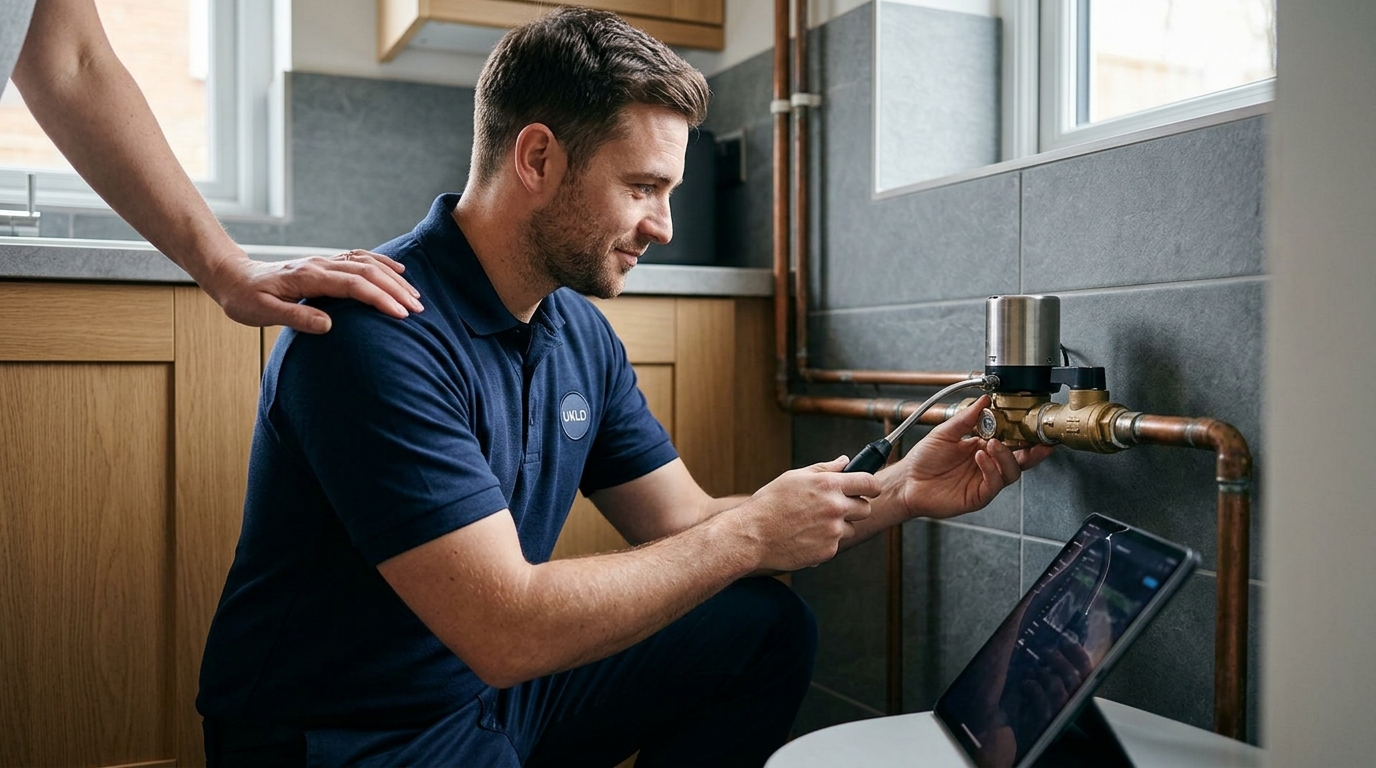
Automatic water shutoff systems are smart devices that monitor water flow and pressure to detect anomalies, then physically close the main valve to stop leaks. They work alongside professional leak detection by providing immediate protection while engineers use advanced technology to locate the exact source of the escape. UK Leak Detection integrates these insights to ensure rapid response and minimal property damage.
The Mechanics of Smart Shutoff Devices
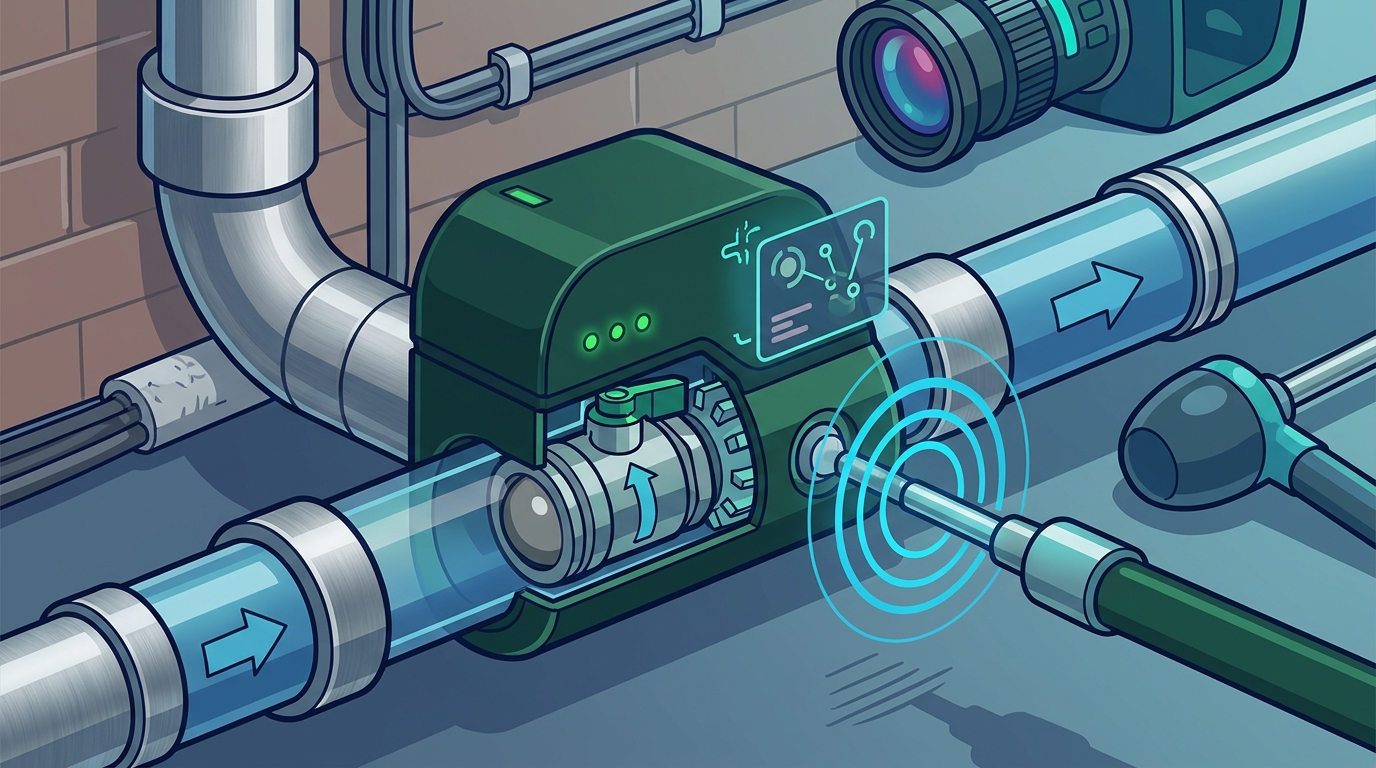
Automatic shutoff systems are electronic valves installed on the main water supply line. They function as a safety net by monitoring flow rates and pressure levels continuously. When the system detects a sudden change, such as a burst pipe or a continuous flow when no appliances are running, it triggers a mechanical closure. This prevents minor drips from becoming catastrophic structural failures.
How Leak Detection Complements Shutoff Technology
While shutoff systems stop the water, they do not identify where the leak is occurring. This is where professional leak detection becomes essential. UK Leak Detection uses non-invasive methods to pinpoint the exact location of the escape without causing unnecessary damage to floors or walls. The combination of automated prevention and expert diagnosis ensures a complete resolution strategy.
Leak detection is the process of using specialized equipment to find hidden water escapes. It involves analyzing acoustic signals, thermal variations, and moisture levels. By integrating shutoff data with diagnostic tools, engineers can confirm the leak's presence and location efficiently. This synergy reduces the time spent on investigation and accelerates the repair process.
Key Technologies in Modern Leak Investigation
Modern leak detection relies on a suite of advanced technologies rather than a single tool. Thermal imaging is a primary method that uses infrared cameras to detect temperature differences caused by water. Since water typically has a different temperature than the surrounding materials, it creates a visible anomaly on the thermal display. This allows engineers to trace pipework routes and identify damp areas without lifting floors.
Acoustic correlation is another critical technique that listens for the sound of escaping water. High-pressure leaks create a distinct noise that can be amplified and analyzed. Tracer gas detection involves introducing an inert gas into the system to find micro-leaks that are silent and invisible. UK Leak Detection employs these methods to provide accurate, evidence-based reports that support insurance claims and repair planning.
Insurance Implications and Trace and Access
Most home insurance policies include Trace and Access cover, which typically provides around £5000 for locating and accessing a leak. This coverage is designed to pay for the professional investigation and the necessary access to repair the pipe. However, insurers require proof that the leak was located accurately before approving access costs. Speculative digging or lifting floors without a confirmed leak location is generally not covered.
Using automatic shutoff systems and professional detection helps satisfy the insurer's requirement for a proven cause of damage. The data from smart valves and the reports from leak detection specialists provide the evidence needed to establish liability. This ensures that the policyholder is not left bearing the cost of unnecessary structural work. It is crucial to review your policy to confirm that Trace and Access is included and to understand the specific terms.
Key Takeaways
- Automatic shutoff systems monitor flow and pressure to stop leaks automatically.
- Professional leak detection identifies the exact source of the water escape.
- Thermal imaging and acoustic correlation are primary non-invasive detection methods.
- Trace and Access insurance cover typically requires a proven leak location.
- UK Leak Detection offers non-destructive investigation to minimize property damage.
- Smart devices and expert diagnosis work together for comprehensive protection.
Frequently Asked Questions
Do automatic shutoff systems replace the need for leak detection?
No, they do not. Shutoff systems stop the water flow but do not locate the leak. Professional leak detection is required to find the source for repair.
How do smart valves detect a leak?
They use sensors to monitor flow rate and pressure. Unusual patterns, such as continuous flow when no water is being used, trigger the shutoff mechanism.
Is leak detection covered by insurance?
Yes, most policies include Trace and Access cover, which pays for locating and accessing the leak. Check your specific policy terms for limits.
What technology does UK Leak Detection use?
UK Leak Detection uses thermal imaging, acoustic correlation, and tracer gas detection to locate leaks non-invasively.
Can I install a shutoff system myself?
While some systems are DIY-friendly, professional installation is recommended to ensure correct placement and compatibility with your plumbing setup.
How long does leak detection take?
It depends on the property and leak type. Most investigations are completed in a single visit, but complex cases may require additional time.
Next Steps for Property Protection
Integrating automatic shutoff systems with professional leak detection provides a robust defense against water damage. UK Leak Detection offers expert investigation services to help you resolve hidden leaks quickly and accurately. To discuss your specific situation or book an assessment, today.