
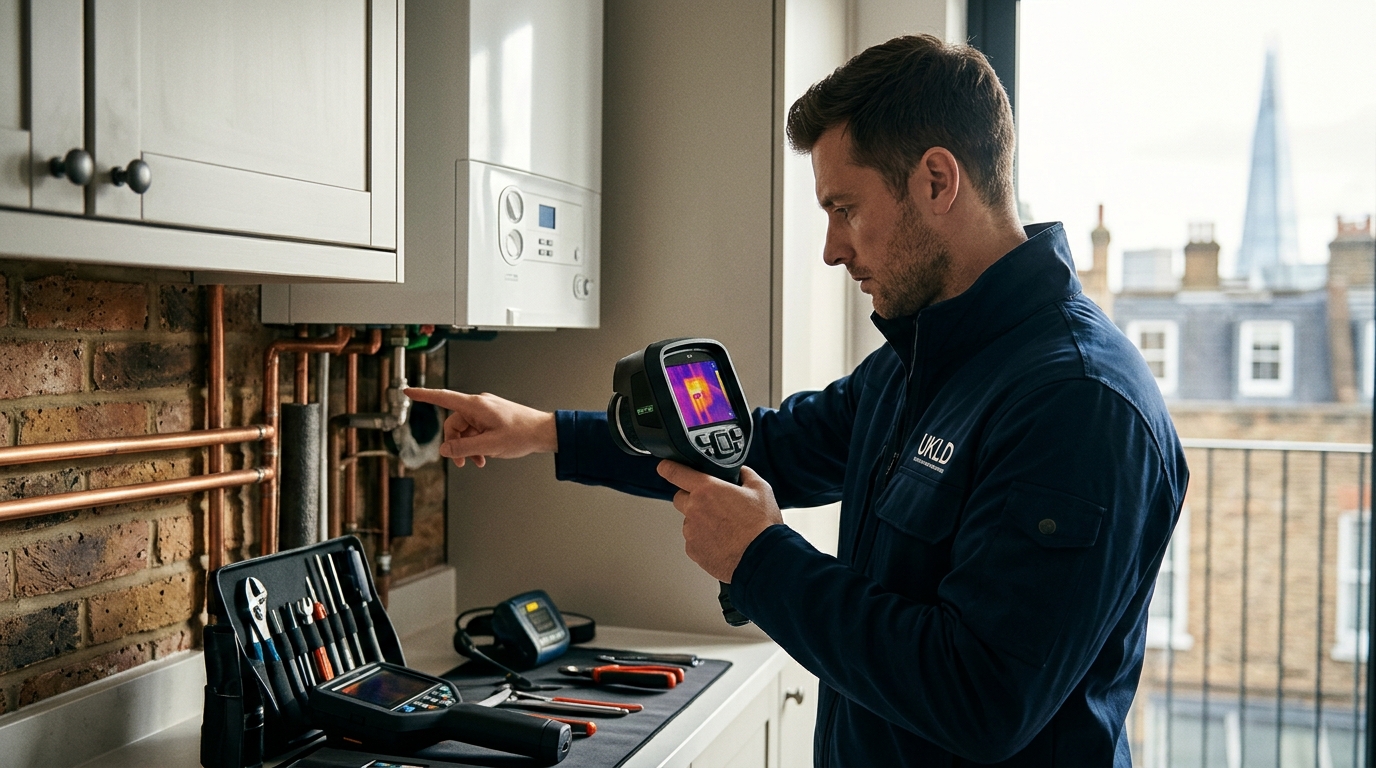
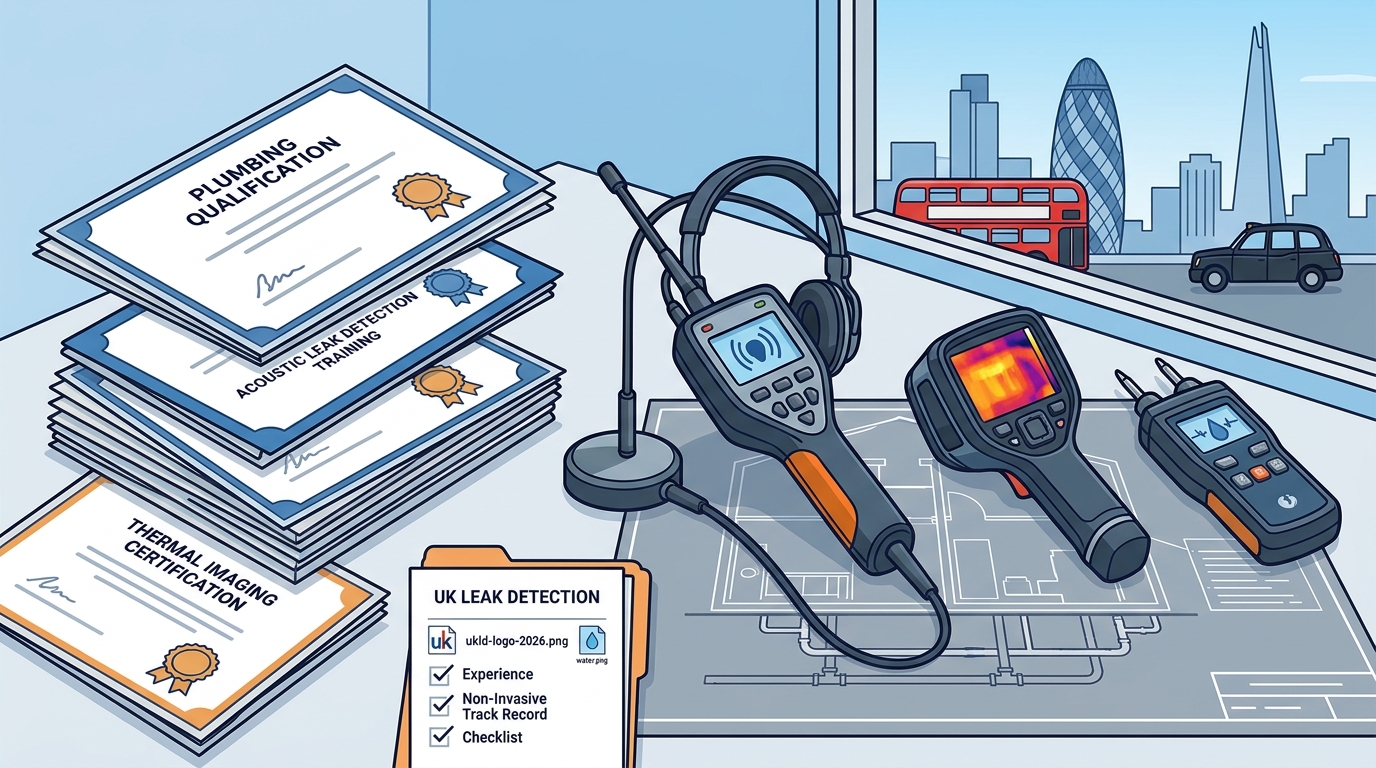
When hiring a leak detection specialist in London, you should look for engineers with formal plumbing qualifications, specific acoustic and thermal imaging training, and a proven track record of non-invasive investigation. UK Leak Detection employs engineers who combine these technical certifications with extensive practical experience to locate hidden water leaks accurately. This approach ensures that the diagnosis is evidence-based rather than guesswork, protecting your property from unnecessary damage.
The Importance of Formal Plumbing Qualifications
Leak detection is not just about finding water; it is about understanding how water moves through a building. A qualified specialist must understand the physics of pressurised systems, the behaviour of different pipe materials, and the structural implications of water ingress. In the UK, the gold standard for this foundational knowledge is the City & Guilds qualification in plumbing and heating. This certification ensures that the engineer understands the entire water supply chain, from the main stopcock to the final tap or radiator.
Without this formal training, a technician may struggle to distinguish between a genuine leak and a system fault, such as a faulty pressure relief valve or an air lock. UK Leak Detection engineers are trained in these core principles, allowing them to diagnose the root cause of pressure loss or damp patches. This technical depth is critical in London, where older Victorian and Edwardian properties often have complex, mixed-material pipework that requires expert interpretation.
Specialist Training in Acoustic and Thermal Technology
General plumbing knowledge is necessary, but it is not sufficient for locating hidden leaks. Specialists must undergo specific training in the use of advanced diagnostic equipment. Acoustic leak detection is the primary method for finding leaks in pressurised pipes. It involves using sensitive microphones to listen for the high-frequency sound of escaping water. However, ambient noise in a busy London home can mask these sounds. Therefore, engineers must be trained in digital signal processing and noise filtering to isolate the leak sound from background interference.
Thermal imaging is another critical tool. A thermal camera is a device that detects infrared radiation to create a visual map of temperature differences. Water leaks often cause temperature anomalies in walls, floors, or ceilings. An untrained eye might see a cold spot and assume a leak, but a trained specialist knows how to interpret these images in the context of the building's construction. UK Leak Detection engineers use high-quality thermal imaging cameras to confirm findings, ensuring that the diagnosis is supported by multiple data points rather than a single, potentially misleading reading.
Industry Certifications and Professional Standards
Beyond individual skills, reputable leak detection companies often hold industry certifications that demonstrate their commitment to quality and safety. One such certification is from the Water Service Association (WSA), which sets standards for water service providers. While not every small specialist holds this, it is a strong indicator of a company that adheres to best practices. Another important standard is the Health and Safety Executive (HSE) compliance, which ensures that engineers follow safe working practices, particularly when dealing with electrical systems or confined spaces.
In London, where property values are high and disruption is costly, adherence to these standards is paramount. A specialist who follows HSE guidelines will manage the site safely, protecting your home and family during the investigation. UK Leak Detection operates under strict health and safety protocols, ensuring that every visit is conducted professionally and with minimal risk to your property. This commitment to standards is a key differentiator when choosing a provider for a sensitive investigation.
Experience with London Property Types
Qualifications on paper are important, but practical experience is equally vital. London is a city of diverse architectural styles, from modern high-rise apartments to centuries-old terraced houses. Each property type presents unique challenges for leak detection. For example, a leak in a modern flat with underfloor heating requires different techniques than a leak in a Victorian house with solid concrete floors. A specialist with extensive experience in London properties will have encountered these variations and developed the intuition to adapt their approach.
Experience also translates into efficiency. A seasoned engineer can often narrow down the search area quickly, reducing the time and cost of the investigation. UK Leak Detection has a strong presence in London and the Home Counties, with engineers who are familiar with the specific construction methods and common leak points in these areas. This local expertise means that they can often provide a faster and more accurate diagnosis than a generic provider who may not be as familiar with the local property landscape.
Key Takeaways
- Look for engineers with City & Guilds plumbing and heating qualifications to ensure a solid technical foundation.
- Specialist training in acoustic and thermal imaging is essential for accurate, non-invasive leak detection.
- Industry certifications, such as WSA membership or HSE compliance, indicate a commitment to professional standards.
- Practical experience with London property types, from Victorian terraces to modern flats, is crucial for effective diagnosis.
- Choose a provider that uses multiple detection methods to confirm findings, reducing the risk of false positives.
- Verify that the company offers a clear guarantee, such as a no-find, no-fee policy, to protect your investment.
Frequently Asked Questions
What is the most important qualification for a leak detection engineer?
The most important qualification is a combination of formal plumbing training and specific certification in leak detection technologies. While a City & Guilds plumbing qualification provides the foundational knowledge, training in acoustic and thermal imaging is what enables an engineer to locate hidden leaks accurately.
Do I need to be present during the leak detection process?
It is highly recommended that you or an authorised representative be present during the investigation. You may need to provide access to specific areas, isolate water supplies, or make decisions about access work. Being present also allows you to ask questions and understand the findings as they are discovered.
How do I verify a specialist's qualifications?
You can ask for copies of their qualifications and certifications. Reputable companies will be happy to provide this information. You can also check if they are members of professional bodies or if they hold specific industry accreditations. Additionally, reading reviews and asking for references can provide insight into their practical experience and reliability.
Is thermal imaging alone enough to find a leak?
No, thermal imaging should not be used as the sole method for leak detection. It is a valuable tool for identifying temperature anomalies, but it can sometimes produce false positives. A reliable specialist will use thermal imaging in conjunction with other methods, such as acoustic detection and moisture mapping, to confirm the location of the leak.
What is the difference between a plumber and a leak detection specialist?
A plumber is qualified to install and repair plumbing systems, while a leak detection specialist is trained specifically to locate hidden leaks using advanced technology. While many plumbers can find obvious leaks, a specialist has the additional training and equipment to detect leaks that are concealed within walls, floors, or underground, often without the need for invasive work.
Choosing the Right Specialist in London
Selecting the right leak detection specialist in London requires looking beyond just the price. You need a provider that combines formal qualifications, specialist technology training, and local experience. UK Leak Detection offers this comprehensive approach, with engineers who are fully qualified and experienced in the unique challenges of London properties. By choosing a specialist with the right credentials, you ensure that your investigation is thorough, accurate, and minimally disruptive.
If you are dealing with a suspected leak, it is worth taking the time to verify the qualifications of the provider you hire. Ask about their training, their equipment, and their experience with properties similar to yours. This due diligence can save you time, money, and stress in the long run. For more information on how our engineers are trained and certified, you can to discuss your specific situation.